If you run a dental or medical practice in the USA, you know the “Morning Rush.”
The waiting room is full, three people are trying to fill out clipboards with messy handwriting and your front desk manager is on hold with an insurance company for the 40th minute.
It’s exhausting. But in 2026, the “Paperwork Crisis” is being solved by Healthcare AI Agents. We’ve moved past simple digital forms.
Today’s AI can “talk” to your EHR, verify insurance in seconds and even argue with insurance bots to get your claims paid.
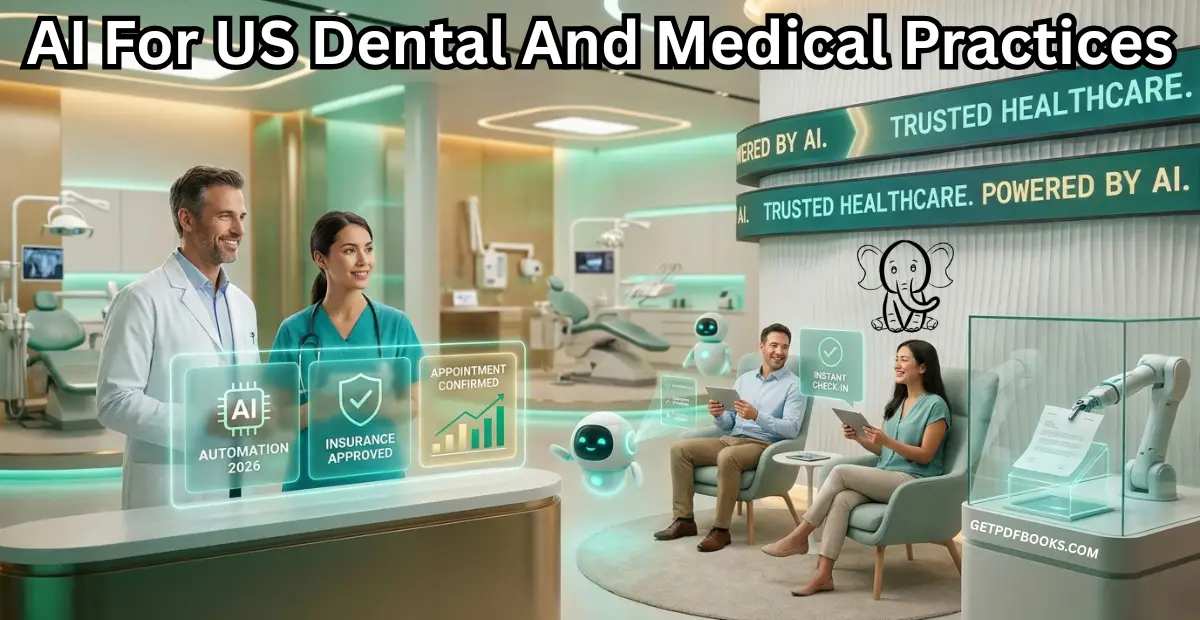
Here is the 2026 AI stack that is helping US practices reclaim 15+ hours of staff time every week.
1. The “Zero-Clipboard” Intake (Conversational Agents)
The days of “Please fill this out and bring it back” are over. US patients in 2026 expect a “Consumer-Grade” experience.
The Workflow: I recommend tools like Luma Health or Hyperleap AI.
-
How it works: When a patient books an appointment, they get a text. Instead of a boring PDF, they talk to an AI agent. The AI asks about their symptoms, medical history and insurance all in a friendly, texting format.
-
The 2026 Edge: The AI “cross-checks” the data. If a patient says they are allergic to Penicillin, the AI automatically flags it in your EHR like Epic or Dentrix before they even walk through the door.
-
The “I/Me” Take: This is a game changer for “No-Shows.” Because the intake happens before the visit, patients feel more committed to showing up.
2. Real Time Insurance Eligibility (The “No-Wait” Verify)
The biggest delay in a US clinic is verifying if a patient’s insurance actually covers the procedure.
The Workflow: Using an Eligibility Agent like Waystar or RevenueWell:
-
What it does: The moment a patient enters their insurance info during intake, the AI pings the payer (Delta Dental, Aetna etc.).
-
The Result: By the time the patient arrives, your staff already knows their co pay, their remaining deductible and if a “Pre-Authorization” is needed. No more “We’ll have to call you back with the price” awkwardness.
3. The “Claim-Scrubber” (Autonomous Billing)
Insurance denials are the #1 reason for “Revenue Leakage” in US practices. In 2026, you shouldn’t be sending a claim unless you know it will be paid.
The Workflow: I suggest a Native AI Billing Tool like RapidClaims or athenahealth.
-
-
How it works: The AI “reads” your doctor’s clinical notes using NLP (Natural Language Processing). It assigns the perfect ICD-10 and CPT codes.
-
The “Audit” Move: Before the claim is sent, the AI “scrubs” it against thousands of payer specific rules. If it sees a missing modifier or a code that usually gets denied for that procedure, it pings your biller to fix it first.
-
4. The “Ambient Scribe” (Clinical Documentation)
Doctors and Dentists spend 2 hours a day on “Charting.” That is time they could spend seeing more patients.
The Workflow: Tools like SteerNotes or Abridge act as an “Invisible Assistant.”
-
What it does: It listens to the patient doctor conversation (with consent) and automatically drafts the SOAP note or clinical summary.
-
Why it works: In 2026, these tools are HIPAA compliant and “reasoning-first.” They don’t just transcribe; they summarize the “Action Plan” and send it to the patient’s portal automatically.
The “HIPAA-Safe” AI Stack for 2026
| Practice Need | Top 2026 Recommendation | Why it Wins |
| Patient Intake | Luma Health / Jotform Health | Most user-friendly for US patients. |
| Medical Scribe | SteerNotes | Highest accuracy for “chart-ready” notes. |
| Insurance/Billing | RapidClaims | Reduces denials by “pre-auditing” claims. |
| Dental Chatbot | Hyperleap AI | Specialized in 24/7 dental scheduling. |
FAQs
1. Is my patient data actually safe with these AI tools?
This is the big one. In the USA, you must use tools that are HIPAA certified and will sign a BAA (Business Associate Agreement).
The tools I listed, like Fini or Hyro, use “PII Shields” to hide patient names and Social Security numbers before the data even hits the AI. Your data stays private.
2. Will this replace my front desk staff?
No, but it will stop them from quitting! US medical staff are burnt out from “phone tag” and paperwork.
AI handles the boring, repetitive tasks so your staff can focus on the person standing in front of them. It turns your front desk into a “Concierge Service.”
3. How does AI help with “Prior Authorizations”?
This is the “Holy Grail.” Some 2026 agents can now automatically gather the “Clinical Necessity” documents from your EHR and submit them to the insurance company. This can turn a 2 week waiting period into a 2 minute approval.
4. Can I use these if I have a small solo practice?
Yes! Tools like NoteMD or Freed are built specifically for solo doctors. They are lightweight, don’t require a big IT team and pay for themselves in just one or two extra patient visits per month.
5. What is “Ambient Intelligence” in a dental office?
It’s a fancy way of saying “The room is smart.” It means while you are working on a patient’s teeth, the AI is listening to your dictation, updating their chart and even ordering the necessary supplies for their next visit (like a crown or bridge) in the background.
6. What is “Zero-Clipboard” intake and how does it work?
Instead of forcing patients to fill out physical paper forms or rigid PDFs when they arrive, a conversational AI agent sends a text message prior to the appointment.
The patient provides their symptoms, medical history and insurance details through a friendly, interactive texting format.
The AI then automatically cross-checks this data and flags critical information like drug allergies directly within the practice’s Electronic Health Record (EHR) system (Epic or Dentrix).
7. How do real time Eligibility Agents eliminate delays at the front desk?
When a patient inputs their insurance information during the digital intake process, the AI instantly pings major insurance payers (such as Delta Dental or Aetna).
By the time the patient walks into the clinic, the staff already knows their exact co-pay, remaining deductible and whether a pre authorization is required, completely avoiding manual phone holds.
8. What is an AI “Claim-Scrubber,” and how does it reduce revenue leakage?
An AI Claim Scrubber uses Natural Language Processing (NLP) to read a provider’s clinical notes and automatically assign the correct ICD-10 and CPT codes.
Before submitting the claim, the AI audits it against thousands of payer specific rules. If it detects a missing modifier or a combination likely to trigger a denial.
It alerts the billing team to fix it beforehand, drastically reducing insurance denials.
9. How do “Ambient Scribes” assist doctors and dentists with charting?
Ambient Scribes listen to the patient provider conversation in the exam room (with patient consent) and automatically draft a structured SOAP note or clinical summary.
These 2026 tools are fully HIPAA compliant and “reasoning-first,” meaning they don’t just transcribe words verbatim they accurately summarize the diagnosis and action plan, saving providers up to 2 hours of manual charting per day.
10. How many hours of administrative time can a US practice expect to save using this AI stack?
By automating patient intake, instant insurance verification, autonomous billing and clinical documentation, US medical and dental practices are successfully reclaiming 15+ hours of staff time every single week.
Ready to Begin?
➜ Click Here to explore top rated affiliate programs on ClickBank!
➜ Reach Our Free Offers: “Come Here To Earn Money By Your Mobile Easily in 2026.”
Want To Read More Then Click Here…
If You Are Interested In Health And Fitness Articles Then Click Here.
If You Are Interested In Indian Share Market Articles Then Click Here.
Thanks To Visit Our Website-We Will Wait For You Come Again Soon…