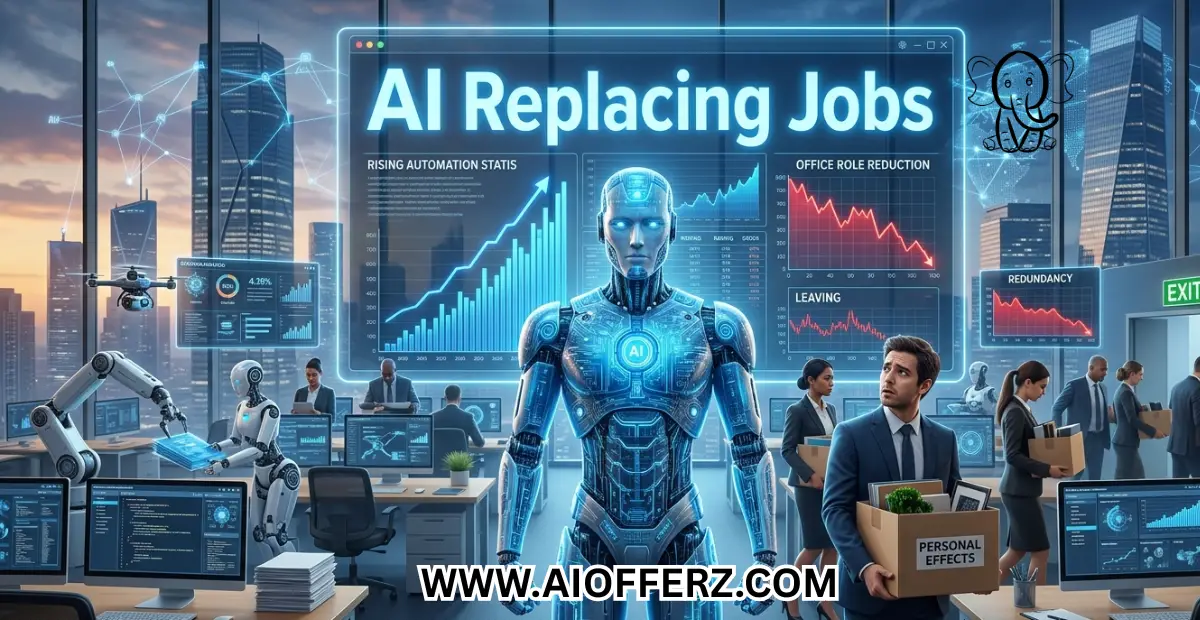
Artificial intelligence is playing an increasingly significant role in workforce reductions across the United States, with new data suggesting that AI-related layoffs have reached record levels in 2026.
According to a report from employment consultancy Challenger, Gray & Christmas, job cuts linked to artificial intelligence during the first five months of the year have already exceeded the combined totals recorded in 2024 and 2025.
The findings highlight the growing impact of automation technologies on the labor market as businesses continue to adopt AI tools to improve efficiency and reduce operating costs.
Employers announced more than 97,000 job cuts in May alone, making it the highest total for the month of May since the economic disruption caused by the Covid-19 pandemic in 2020.
Industry experts say the rapid advancement of generative AI, machine learning systems, and automated software solutions is enabling companies to perform a wider range of tasks with fewer employees.
While AI adoption has created opportunities in some technology-related fields, it has also increased pressure on roles that involve repetitive administrative, customer service, and data-processing work.
The technology sector has emerged as one of the most affected industries, with companies continuing to restructure operations and invest heavily in automation.
Businesses are increasingly relying on AI-powered systems for coding assistance, content generation, customer support, data analysis, and workflow management.
As a result, some positions that previously required large teams can now be handled with smaller workforces supported by advanced software tools.
Economists note that artificial intelligence is not the sole reason behind recent layoffs. Higher borrowing costs, economic uncertainty, and ongoing corporate cost-cutting efforts have also contributed to workforce reductions.
However, AI has become one of the most frequently cited factors in employer announcements, reflecting its growing influence on business strategies.
The trend has sparked broader discussions among policymakers, labor organizations, and business leaders about the future of work. Supporters argue that AI can boost productivity and create new opportunities, while critics warn that rapid automation could displace workers faster than new jobs are created.
As companies continue integrating AI into daily operations, experts believe workforce transformation will remain a key issue throughout 2026. Many organizations are now focusing on employee reskilling and training programs to help workers adapt to an increasingly automated economy.