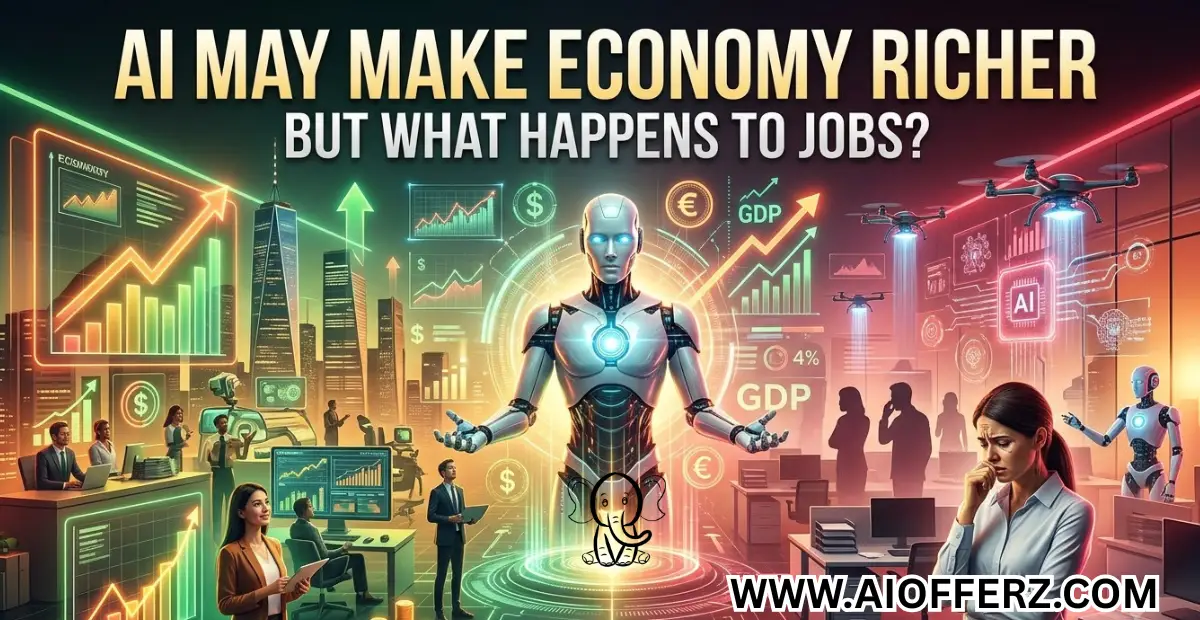
artificial Intelligence could significantly reshape the US economy over the coming years, potentially making the economy larger while reducing employment opportunities for millions of workers. A new economic model from Anthropic’s economics team has examined how the growing use of AI could affect the US economy by 2030.
The model outlines three possible scenarios: modest, substantial and extreme. According to the analysis, economic growth occurs in all three scenarios. However, the outcomes differ considerably depending on how much knowledge-based work is performed by AI and how the resulting economic benefits are distributed.
The most disruptive results appear in Anthropic’s extreme scenario. Under this scenario, overall unemployment could rise to 11.9%, while unemployment among knowledge workers could reach 17.9%. Employment among knowledge workers could decline by 21.5%, accompanied by an estimated 11.5% fall in their wages.
Despite the significant impact on employment, the model suggests that the US economy could become substantially larger. GDP could increase by 32.4% in the extreme scenario. At the same time, labour’s share of national income could decline from around 60% to 45.2%.
The figures highlight a major economic question surrounding the rapid development of AI: whether large productivity gains will translate into better opportunities for workers or mainly benefit businesses and capital owners.
Anthropic’s more modest scenario presents a considerably less disruptive outcome. In that case, unemployment could rise to 3.9%, while knowledge-worker wages could increase by 0.4%. GDP growth would be comparatively limited at 1.6%.
Anthropic has stressed that the scenarios are not predictions of what will definitely happen. Instead, the model is designed to explore possible economic outcomes under different levels of AI adoption and labour displacement.
The company has also encouraged the public to explore the scenarios and compare their expectations with responses collected from more than 10,000 Americans.
The analysis adds to growing debate over how governments, businesses and workers should prepare for an economy in which AI could generate substantial wealth while potentially reducing demand for human labour.