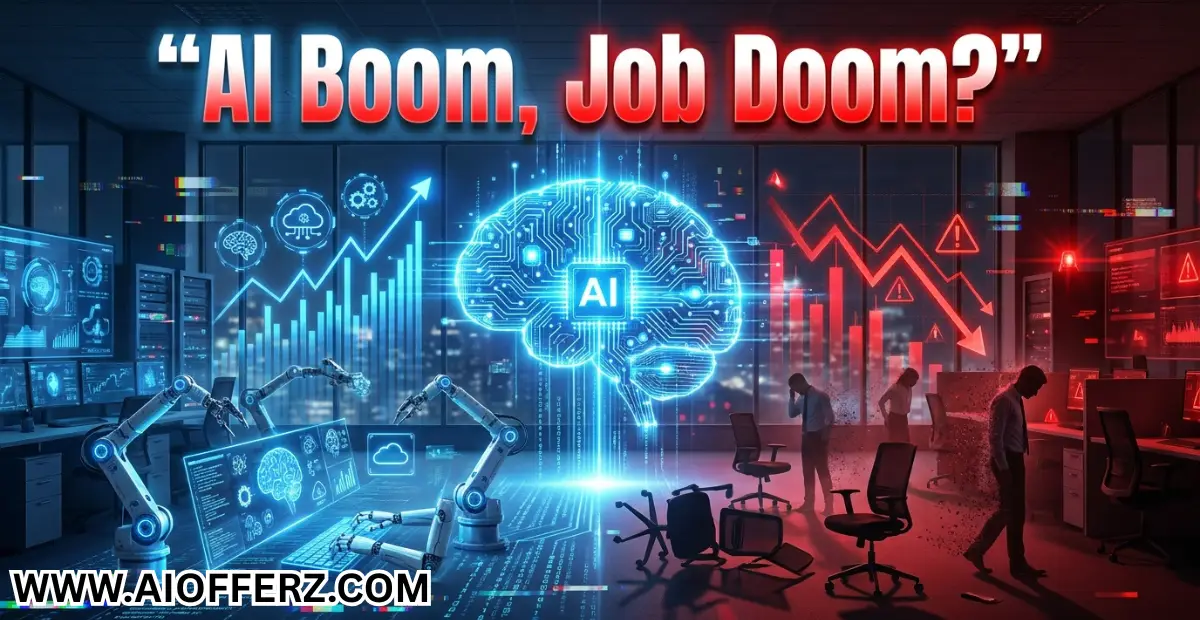
A fresh wave of layoffs across the technology sector has reignited concerns about the impact of artificial intelligence on jobs, as companies continue to invest heavily in automation and AI-driven systems.
Reports suggest that more than 20,000 roles have been cut in recent months, with many firms citing restructuring and efficiency improvements as key reasons.
Industry analysts say the rapid growth of AI tools is changing how companies operate, allowing them to automate tasks that were once handled by human workers.
From customer support to data processing and even software development, AI is increasingly being used to perform routine and repetitive work at scale.
What Is Driving the Latest Job Cuts?
Many companies have pointed to cost reduction and productivity gains as the main drivers behind recent layoffs. By adopting AI technologies, businesses can streamline operations and reduce dependency on large workforces.
This shift is particularly visible in sectors such as technology, finance, and customer service, where automation can quickly replace manual processes.
At the same time, economic pressures and the need to remain competitive have pushed firms to rethink their hiring strategies. Instead of expanding teams, companies are focusing on building smaller, more efficient workforces supported by AI tools.
Why Workers Are Growing Concerned
The scale and speed of these job cuts have raised alarm among employees and experts alike. While AI is creating new opportunities in areas like machine learning and data science, many workers fear that the pace of change may outstrip their ability to adapt.
Experts warn that without proper reskilling and support, large segments of the workforce could be left behind. There are also concerns that the benefits of AI-driven growth may not be evenly distributed, potentially widening economic inequality.
Despite these fears, some industry leaders argue that AI will ultimately create more jobs than it replaces, particularly in emerging fields.
However, the transition period remains uncertain, and the current wave of layoffs highlights the challenges of balancing innovation with workforce stability.
As the AI boom continues, the debate over its impact on employment is likely to intensify, with policymakers, companies, and workers all searching for ways to navigate the changing landscape.