After months of headlines predicting that artificial intelligence could replace millions of jobs, recent developments from major technology companies are offering a more balanced picture of AI’s impact on the workforce.
Rising operational costs and practical limitations are leading some businesses to rethink how aggressively they adopt AI tools, while industry leaders continue to emphasize that human workers remain essential.
The discussion intensified after reports emerged that Microsoft is reducing most of its internal licenses for Anthropic’s Claude Code and directing employees toward its own GitHub Copilot CLI platform. While Microsoft says the move is part of a broader strategy to unify development tools, multiple reports suggest that cost management also played a role in the decision.
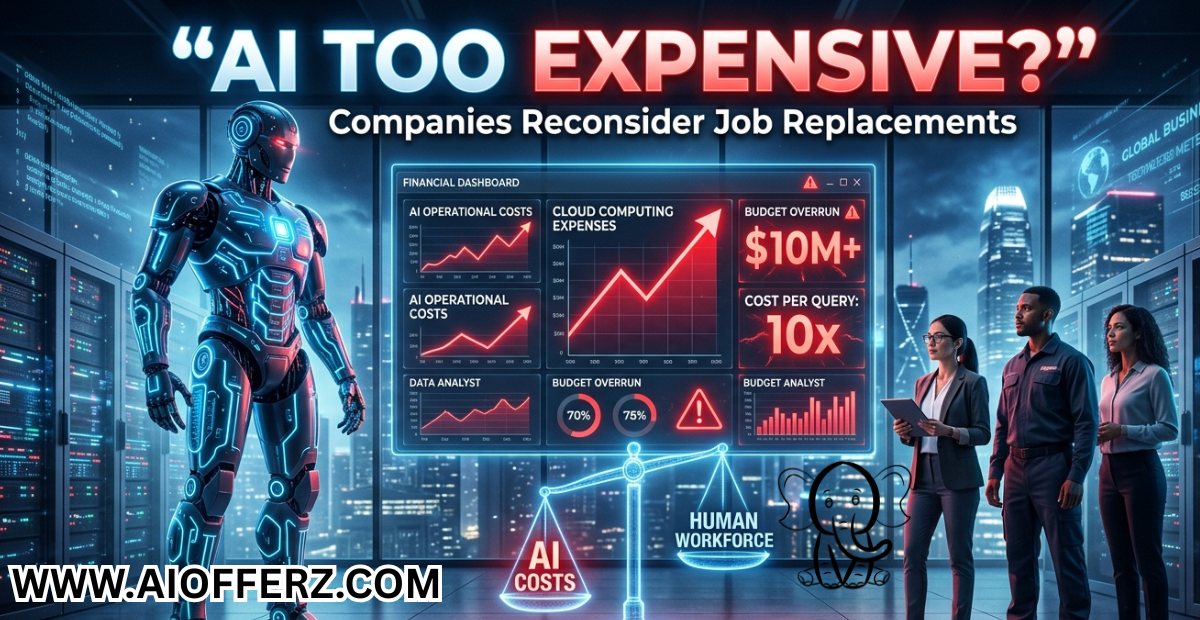
The transition comes at a time when many companies are facing unexpectedly high AI expenses. Enterprise AI tools often rely on usage-based pricing models, meaning costs can rise significantly as employee adoption increases.
Reports indicate that some organizations have struggled to forecast these expenses accurately as AI usage expands across departments.
Companies Reassess the Economics of AI
Microsoft’s decision does not represent a retreat from artificial intelligence. The company continues to invest heavily in AI products and services, and Claude models will still remain available through certain Microsoft platforms.
However, the move highlights a growing focus on controlling costs and optimizing AI deployments rather than simply expanding usage at any price.
Industry observers note that businesses are increasingly evaluating whether AI delivers enough productivity gains to justify its growing infrastructure and software expenses. This has led to a more cautious approach in some organizations, especially as AI-related budgets come under scrutiny.
Human Workers Still Seen as Critical
At the same time, Nvidia CEO Jensen Huang has repeatedly pushed back against predictions that AI will eliminate the need for human workers.
Huang argues that AI should be viewed as a productivity tool that helps people perform tasks more efficiently rather than a direct replacement for entire professions.
His comments have been welcomed by many workers concerned about the future of employment in an AI-driven economy.
Experts now believe the future workplace is likely to involve closer collaboration between humans and AI systems rather than complete automation
. While AI continues to transform industries such as software development, customer service, and data analysis, companies are discovering that technology alone cannot replace creativity, decision-making, and human judgment.
As businesses balance innovation with financial realities, the narrative surrounding AI is becoming more nuanced. Instead of a rapid replacement of workers, the focus is increasingly shifting toward how companies can combine human expertise with AI tools in a sustainable and cost-effective way