A new study has raised serious concerns about the growing influence of artificial intelligence in academic research after revealing that nearly 1.5 lakh AI-generated fake citations entered the scientific record in 2025 alone.
Researchers say many of these fabricated references appeared in scientific papers and even survived peer review before being published in journals.
The findings come from a large-scale audit of millions of academic papers and preprints hosted on major scientific repositories including arXiv, bioRxiv, SSRN, and PubMed Central.
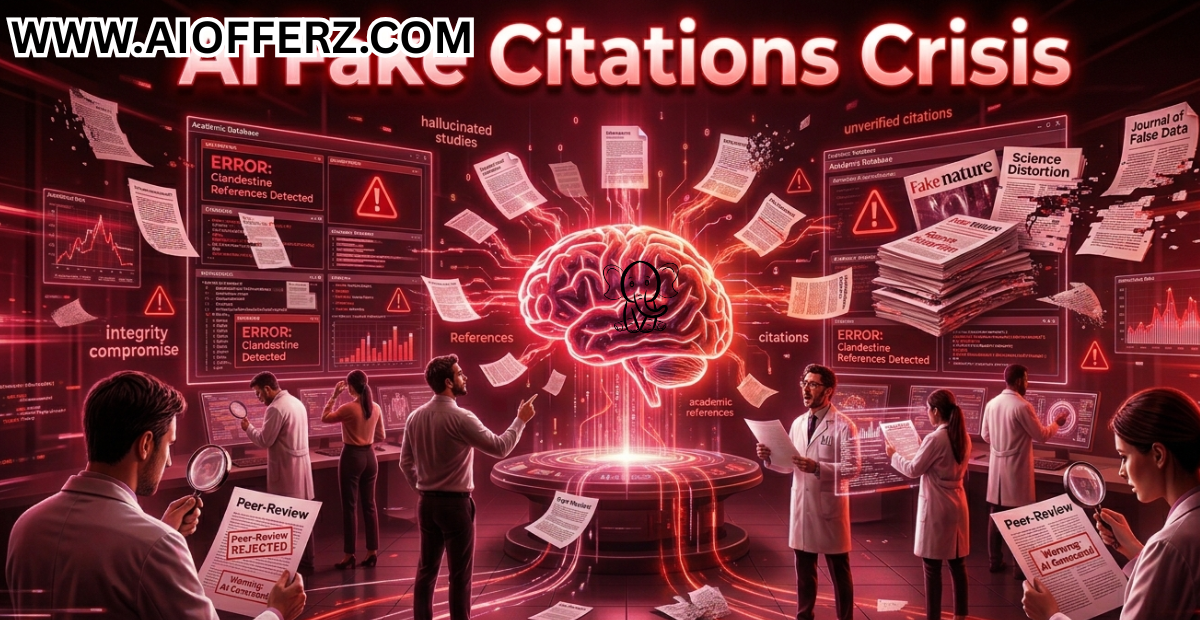
Researchers identified more than 146,000 “hallucinated citations” — references generated by AI tools that point to studies, authors, or journals that do not actually exist.
Experts say the issue highlights a growing weakness in scientific publishing systems as researchers increasingly rely on AI chatbots and writing assistants to prepare papers.
These AI systems are known to generate realistic-sounding but false information, especially when producing bibliographies and research references.
AI Hallucinations Raise Alarm in Scientific Publishing
According to the study, the number of fake citations has risen sharply since 2023 alongside the rapid adoption of generative AI tools in academia.
Researchers found that most fabricated citations were not isolated incidents but spread across thousands of papers, suggesting many authors failed to properly verify AI-generated references before submission.
Scientists warn that fake citations could damage trust in academic literature because research depends heavily on accurate references to validate findings and support future studies.
Some experts also fear that incorrect citations could spread misinformation if other researchers unknowingly rely on fabricated studies.
The study additionally found that many fake references passed through peer review undetected, exposing weaknesses in editorial oversight and publication verification systems.
Researchers Call for Stronger Verification Systems
The growing problem has triggered calls for stricter citation-checking tools and improved review standards within scientific publishing.
Experts say publishers, universities, and researchers must adopt automated verification systems to detect fabricated references before papers are published.
Some researchers argue that AI itself is not the main problem, but rather the lack of human fact-checking and overreliance on automated writing tools.
Online discussions among academics have also reflected rising frustration over how easily false citations are entering trusted scientific records.
The report highlights a broader challenge facing the research community as artificial intelligence becomes more deeply integrated into education and scientific work.
While AI tools can improve productivity, experts warn that unchecked use may create long-term risks for research credibility and public trust in science.