For the last two years, artificial intelligence has been viewed as a major force reshaping the global workforce, with thousands of employees losing jobs as companies rushed to automate tasks and reduce costs.
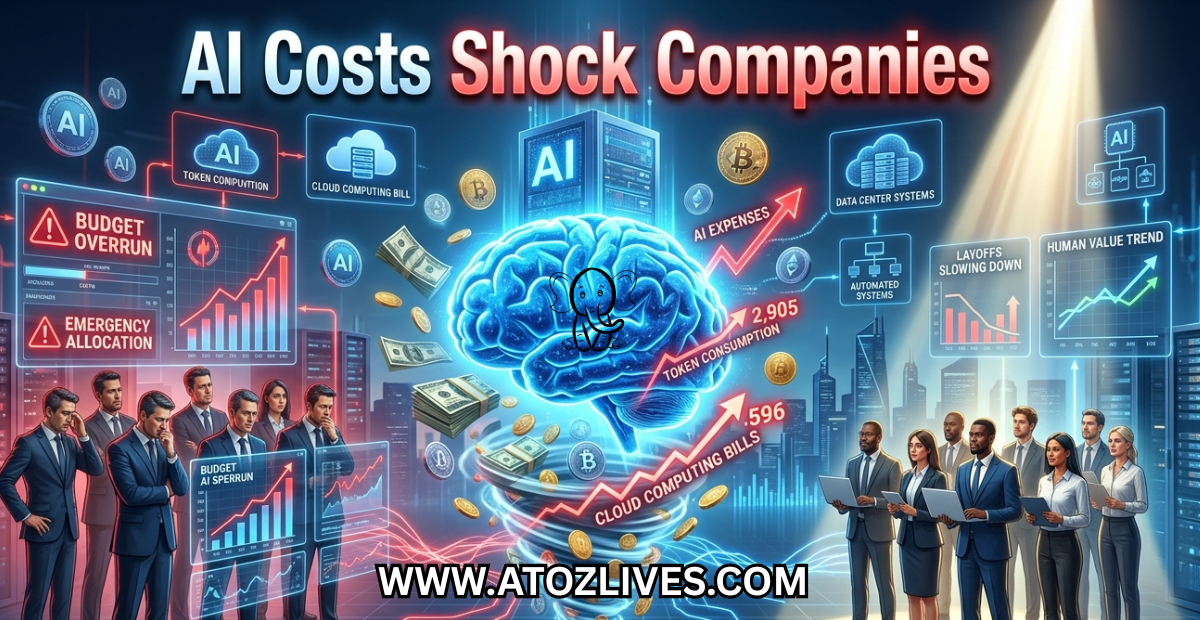
But a new challenge is emerging for businesses investing heavily in AI: the technology itself is becoming extremely expensive to operate.
Several major companies are now questioning whether large-scale AI adoption can deliver the savings they originally expected.
Reports suggest that rising costs linked to AI infrastructure, cloud computing, advanced models, and token-based pricing are forcing some firms to rethink aggressive automation strategies.
Industry analysts say many organisations initially believed AI could significantly reduce labor expenses.
However, the real-world cost of running advanced AI systems at scale is proving far higher than expected, especially as employees increasingly depend on AI tools for coding, research, customer support, and business operations.
AI Spending Creates New Financial Pressure
According to recent reports, companies such as Microsoft and Uber have faced growing concerns over AI-related expenses. Some executives have acknowledged that AI usage costs are rising faster than anticipated, with enterprise budgets being consumed much earlier than planned.
Research from Goldman Sachs and industry analysts suggests that demand for AI agents and advanced automation tools could dramatically increase computing costs over the next few years.
At the same time, companies are still struggling to measure whether AI investments are producing enough productivity gains or revenue growth to justify the spending.
This growing financial pressure is creating uncertainty around future workforce reductions. Some experts now argue that for certain tasks, maintaining human employees may remain more cost-effective than running large-scale AI systems continuously.
Job Apocalypse Fears Begin to Ease
The debate has also shifted among AI leaders themselves. Sam Altman recently said he no longer believes AI will trigger the widespread “jobs apocalypse” that many feared.
While acknowledging that AI will transform work, he emphasized that human interaction and communication continue to play an essential role in many professions.
At the same time, concerns about layoffs remain. Surveys show that many CEOs still expect AI-driven workforce reductions, particularly in entry-level and administrative roles
. However, disappointing returns on some AI investments are making companies more cautious about replacing large portions of their workforce too quickly.
As businesses balance rising AI costs with workforce planning, the future may be less about humans versus machines and more about finding a sustainable combination of both.
For now, the soaring cost of artificial intelligence is becoming an unexpected factor slowing the rush toward full automation.