It was 2:00 AM on a Tuesday in the Q4 rush when our flagship Amazon product went out of stock.
The sales velocity had spiked by 300% over a single weekend due to an unexpected viral trend, completely blinding our traditional spreadsheet-based forecasting models.
By the time our container cleared the Port of Long Beach and hit the Amazon fulfillment centers, we had lost weeks of peak revenue, fallen victim to massive stockout penalties and watched our hard-earned Best Seller Badge vanish into thin air.
That brutal experience forced a harsh realization: relying on historical sales averages and basic manual calculations is financial suicide in the modern e-commerce landscape.
The global supply chain is too erratic, Amazon’s algorithms are too punitive and consumer behavior shifts too rapidly.
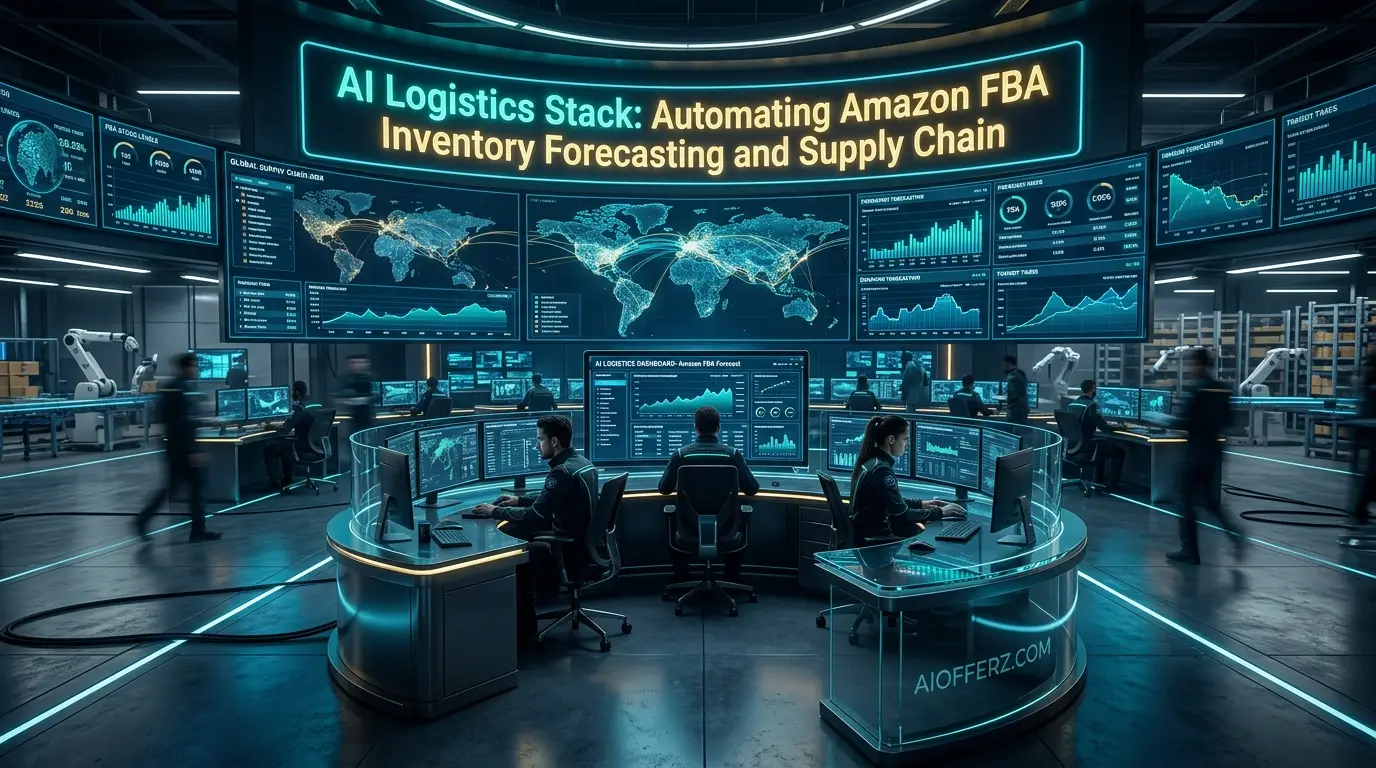
To survive and scale, we had to tear down our fragmented systems and rebuild them from scratch. We spent the next year engineering a fully integrated AI Logistics Stack.
This system transformed our operations from a chaotic, reactive nightmare into a predictive, automated machine that anticipates demand, optimizes cash flow and keeps our supply chain running flawlessly. This post outlines the exact framework we used to achieve this operational freedom.
Want To Use Other AI To Write…
The Fragmented Supply Chain Crisis
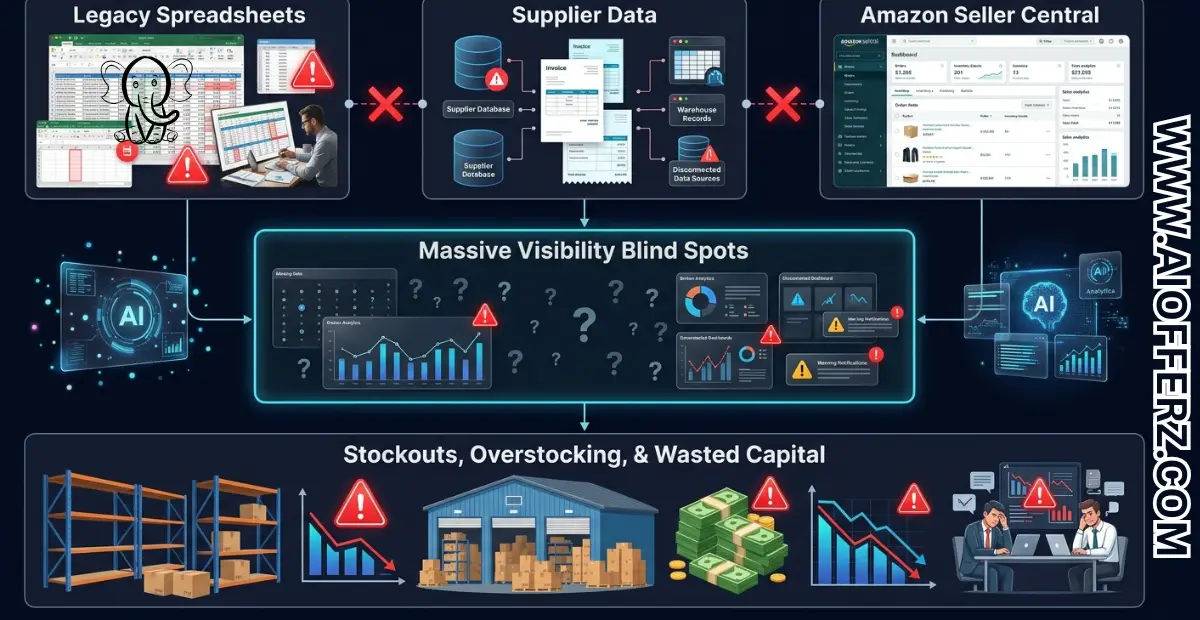
Most Amazon FBA sellers operate their businesses using a disjointed patchwork of legacy tools, manual spreadsheets and gut instinct.
This fragmented approach creates massive visibility blind spots across the entire operational ecosystem.
When your inventory tracking is decoupled from your marketing data or your supplier lead times are treated as static numbers, system failures are inevitable.
The Cost of Inaccurate Forecasting
Inaccurate forecasting triggers two highly destructive financial scenarios: crippling stockouts or severe overstocking.
When you run out of inventory, you do not just lose immediate top-line revenue. You also halt your organic keyword ranking momentum, allowing agile competitors to seize your market share.
On the flip side, overstocking ties up vital working capital in physical assets that sit idle on warehouse shelves. This triggers exorbitant storage fees and forces you to run aggressive, margin-eroding promotions just to liquidate excess inventory.
Wanna Use CustomGPT AI…
The Evolution of the AI Logistics Stack
An AI Logistics Stack represents a fundamental shift away from static, backward-looking data analysis.
Instead of merely looking at what you sold last month to guess what you will sell next month, artificial intelligence synthesizes hundreds of distinct data variables simultaneously.
By unifying internal metrics like advertising performance, price elasticity and historical conversion trends with external data vectors like macroeconomic shifts, competitive landscape movements and seasonal weather patterns, machine learning algorithms construct highly nuanced, predictive operational models.
Anatomy of a Modern AI Logistics Stack
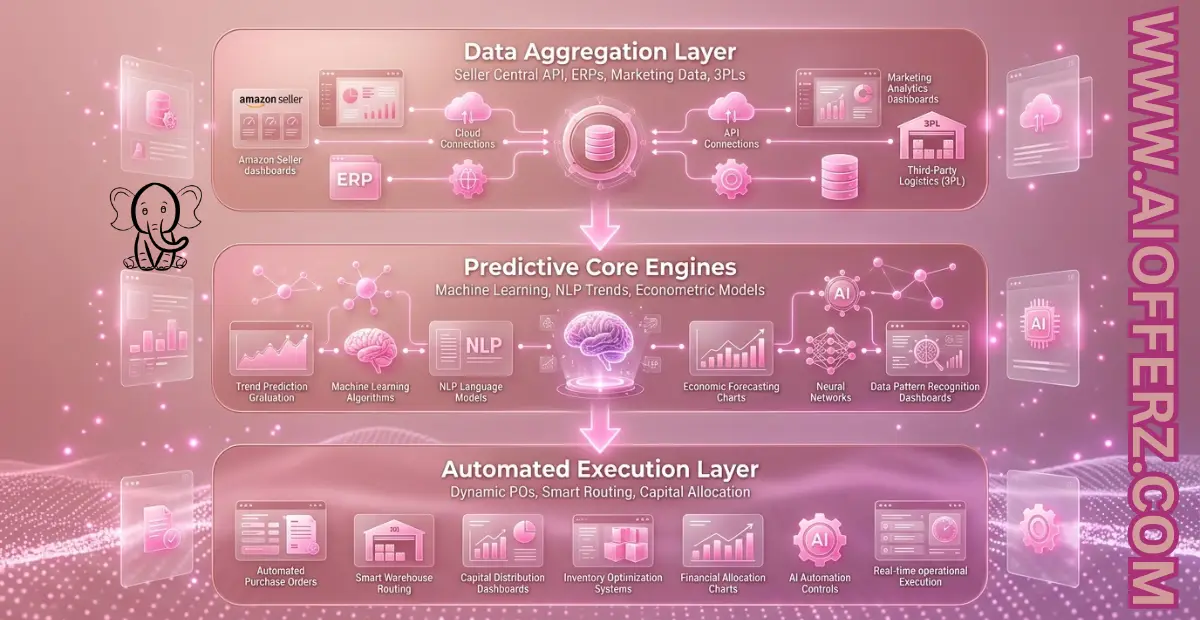
A truly automated, high-performing e-commerce infrastructure relies on a beautifully synchronized technical architecture.
Think of it as a multi-tiered ecosystem where every single layer builds upon the next, transforming raw operational data into precise execution.
1. The Data Aggregation Layer
The base of your infrastructure must ingest raw information from every touchpoint of your supply chain ecosystem.
This layer connects directly to the Amazon Seller Central API to capture real-time sales velocity, buy box dynamics and storage utilization.
Simultaneously, it integrates with your external enterprise resource planning software, your third-party logistics warehouses, your freight forwarder tracking systems and your marketing platforms like Google Ads and Meta Commerce Manager.
By centralizing these disparate data streams, you eliminate silos and establish a clean, verified foundation for analysis.
Using Many AI’s For Many Work, Solution Is Here…
2. The Predictive Core Engine
Once the data is aggregated, the predictive core engine takes over. This layer uses advanced machine learning models to identify complex patterns that human analysts could never spot.
The predictive core does not view sales figures in isolation; it dynamically weighs variables such as historical promotional lifts, local holiday impacts and competitive price fluctuations.
The engine runs continuous simulations to project your future inventory needs with incredible statistical precision.
3. The Automated Execution Layer
Predictive insights are useless without a fast execution mechanism. The top layer of the stack translates forecasting intelligence into automated operational workflows.
When inventory dips below dynamically calculated thresholds, the execution engine drafts purchase orders, schedules freight pickups, adjusts multi-channel fulfillment distribution nodes and updates your marketing teams to scale ad spend up or down based on real-time stock availability.
“Live Chat Jobs – You have to try this one”
Transforming Amazon FBA Demand Forecasting
Traditional e-commerce demand planning relies heavily on moving averages. A seller might look at their trailing 30-day sales velocity, apply a arbitrary growth percentage and place their next factory order.
This primitive methodology completely falls apart when faced with supply chain volatility or rapid market shifts.
Moving Beyond Simple Moving Averages
Machine learning algorithms approach demand forecasting through multi-layered time-series analysis. By deploying sophisticated mathematical models like Long Short-Term Memory networks and Prophet algorithms.
An AI engine breaks down your sales history into distinct components: baseline trend lines, recurring cyclical patterns, and random statistical noise.
This allows the system to distinguish a temporary weekend sales spike from a long-term shift in consumer demand, preventing you from over-ordering based on short-term market anomalies.
Integrating External Data Variables
The real magic happens when your forecasting models look outside your internal Amazon store data. A sophisticated AI Logistics Stack monitors external market indicators to refine its projections.
If consumer confidence indexes dip, or if competitive listings within your niche experience sudden out-of-stock events, the AI adjusts your demand curve instantly.
It can even monitor digital trend signals across social platforms to predict demand surges before they translate into Amazon search volume.
To reduce mental stress and relief from anxiety , you can try it.
Dynamic Lead Time Tracking
One of the most common reasons Amazon sellers stock out is assuming their supplier lead times are completely fixed. If a factory says production takes 30 days, the seller builds their calendar around that number.
An AI infrastructure tracks actual historical performance metrics. It monitors precisely how long a manufacturer takes to produce goods across different quarters, flags customs clearance delays at specific ports and factors in domestic freight transit variables.
If real-world lead times begin creeping upward, the system automatically pulls your reorder triggers forward.
Supply Chain Automation and Intelligent Replenishment
True operational efficiency is achieved when your forecasting systems tie directly into an automated replenishment framework.
This ensures that inventory flows seamlessly from raw manufacturing facilities all the way to Amazon fulfillment centers without manual friction.
Automated Purchase Order Workflows
When your predictive model determines that it is time to restock, the AI system does not just send an alert; it generates an optimized draft purchase order.
This PO specifies the exact stock-keeping unit quantities needed, balances container space utilization to minimize ocean freight costs and factors in the manufacturer’s specific minimum order quantities.
Once approved by an operations manager with a single click, the system securely transmits the order details directly to the supplier via automated digital data exchanges.
The Smoothie Diet : 21 Day Rapid Weight Loss Program
AI Forecast Trigger ── Auto-Generated PO ── Manager 1-Click Approval ── Direct Supplier Transmission
Intelligent 3PL and Inventory Distribution Routing
Managing inventory within the Amazon ecosystem requires a smart hybrid strategy.
Relying solely on Amazon FBA warehouses for long-term storage is incredibly expensive due to their strict inventory performance index metrics and costly aged inventory fees.
A premium setup utilizes a cost-effective 3PL warehouse network alongside Amazon FBA.
The AI infrastructure dynamically manages this flow, calculating exactly how many days of inventory to maintain at FBA to secure Prime delivery badges while holding the remainder of your safety stock at a local 3PL.
The system automatically triggers small, high-frequency replenishment shipments into Amazon to maximize your storage efficiency.
Managing Working Capital and Mitigating Risk
An optimized supply chain is fundamentally an exercise in highly efficient working capital management.
Every single dollar tied up in excess inventory sitting on a pallet is a dollar that can’t be spent on product innovation, aggressive marketing campaigns or strategic brand acquisitions.
Cash Flow Optimization Strategies
An AI Logistics Stack helps you run a lean capital model. By drastically reducing safety stock buffers through highly accurate predictive modeling, you free up vital cash reserves.
The system also calculates the precise return on investment of ordering larger bulk quantities to receive factory discounts versus ordering smaller, frequent batches that preserve your monthly liquid cash.
Supply Chain Risk Mitigation
Global logistics networks are inherently unpredictable. Labor disputes at major ports, changing customs regulations and geopolitical tensions can instantly disrupt your operations.
The AI stack actively monitors these operational risks by running continuous simulation models.
If a major shipping lane experiences severe congestion, the system calculates the financial impact of routing shipments through alternative ports or switching to expedited air freight, helping you make data-driven mitigation decisions instantly.
You also can use MITOLYN to get an overall healthy body in a natural way.
Implementing the AI Logistics Stack: A Step-by-Step Guide
Transitioning your e-commerce business away from manual workflows onto an automated, AI-driven logistics infrastructure requires a deliberate, structured approach.
Step 1: Clean and Unify Your Historical Data
Before you connect any machine learning tools to your business, you must clean your historical data stack.
Audit your past sales records to isolate and strip out non-recurring data anomalies, such as massive artificial sales spikes caused by one-off viral promotions or long periods of zero sales caused by historical stockouts.
Providing your AI engine with clean data ensures its initial training models are accurate.
Step 2: Establish Real-Time API Connections
Map out your tech stack and build direct API pipelines across your entire operation. Connect your Amazon Seller Central account, your independent shop platforms, your 3PL warehouse management software and your primary advertising accounts to a centralized data warehouse.
This ensures your systems have access to real-time updates rather than lagging, batch-processed files.
You can use it to control blood pressure and increase the strength of the heart.
Step 3: Run Parallel Systems for Validation
Never switch over to a fully automated inventory system overnight. Run your new AI Logistics Stack parallel to your legacy manual tracking processes for at least 60 to 90 days.
Compare the AI’s demand projections and replenishment recommendations against your manual calculations. Once the system demonstrates consistent accuracy, you can safely hand over operational control.
The Competitive Advantage of Automated Logistics
Building a robust AI Logistics Stack is no longer a luxury reserved exclusively for eight-figure retail conglomerates. In today’s hyper-competitive Amazon marketplace, automated supply chain management is an absolute necessity for long-term survival.
By offloading complex forecasting calculations and routine replenishment workflows to smart digital systems, you eliminate costly human errors, protect your profit margins and unlock tremendous operational scalability.
The sellers who continue to run their multi-million dollar brands off basic spreadsheets will inevitably be outpaced by agile, data-driven operators who leverage AI to optimize every moving part of their global supply chain.
Both body and mind remains healthy If you are using it.
FAQs
1. How does an AI logistics stack differ from the inventory tools built into Amazon Seller Central?
The native inventory tools inside Amazon Seller Central rely almost entirely on basic historical sales averages and fixed, linear lead times.
They do not factor in your external multi-channel sales data, off-Amazon marketing spend, off-site 3PL warehouse stock or complex external market indicators.
An AI Logistics Stack unifies your entire business ecosystem outside of Amazon, running advanced predictive models that deliver highly accurate demand forecasting.
2. Can machine learning accurately predict demand for newly launched products with no sales history?
Yes. While predicting demand for new products is inherently challenging, an AI system handles this by using advanced lookalike modeling.
The engine analyzes the historical launch trajectories, seasonality factors and search volume patterns of similar items within your catalog or the broader marketplace.
It uses these insights to construct a highly reliable predictive baseline until the new product generates its own real-time sales data.
3. How does supply chain automation prevent costly Amazon FBA overstock fees?
The AI system monitors your real-time Amazon storage limits alongside your rolling 90-day sales projections. It dynamically calculates your exact Inventory Performance Index score vulnerabilities and automatically adjusts your replenishment schedules.
Instead of sending large bulk shipments directly to Amazon, it routes inventory to local 3PL warehouses and pushes small, just-in-time shipments to FBA, keeping your storage fees as low as possible.
4. Will implementing an automated inventory stack require custom software development?
Not necessarily. While large enterprise brands frequently build custom proprietary algorithms, standard mid-market Amazon sellers can construct an elite AI logistics stack using modern, no-code integrations.
Connecting premium, off-the-shelf AI demand planning platforms with your existing ERPs and warehouse management systems via robust API connectors gives you enterprise-grade automation without a massive software development budget.
5. How does the system account for sudden supply chain disruptions like customs delays or port strikes?
The AI engine continuously tracks actual transit times across your shipping lanes rather than relying on static estimates.
If it detects climbing processing delays at a specific port or tracking anomalies with your freight forwarder, it immediately updates its risk models.
The system flags these bottlenecks in real time, pulls your reorder points forward and presents alternative shipping routes to prevent a stockout.
6. Can an AI forecasting system manage multi-channel fulfillment across platforms like Shopify and TikTok Shop?
Absolutely. A major benefit of an integrated logistics stack is its platform-agnostic design. It aggregates demand signals from Amazon, Shopify, TikTok Shop and wholesale channels simultaneously.
This unified view ensures that your safety stock is calculated across your entire business, preventing you from over-committing inventory to one channel when another is experiencing a major sales surge.
7. How much historical sales data does an AI need to generate highly accurate forecasts?
For optimal results, providing 12 to 24 months of continuous historical sales data is ideal. This depth allows the machine learning algorithms to clearly identify annual seasonal trends, holiday velocity patterns and long-term brand growth trajectories.
However, if you are a younger brand, the system can still deliver highly valuable insights using a shorter data runway combined with real-time market niche tracking.
8. Does an AI logistics stack automate the actual payment and financial execution of purchase orders?
For safety and security, the system acts as an intelligence and optimization layer that drafts highly detailed purchase orders and financial planning models.
It automates everything up to the point of execution but leaves the final click authorization to an operations manager or business owner. This ensures you maintain absolute control over your liquid capital and supplier relationships.
9. How does advertising spend data integrate into an AI demand forecasting model?
Traditional forecasting tools are completely blind to marketing plans which frequently causes stockouts during major promotional pushes.
An AI stack connects directly to your advertising accounts to monitor real-time changes in ad spend, impression shares and conversion rates.
If your marketing team scales up budgets on a specific campaign, the AI instantly factors that increased visibility into its short-term demand projections.
10. What is the average return on investment after migrating to an AI-driven logistics stack?
Most e-commerce brands see a measurable return on investment within the first two quarters of deployment. Financial gains primarily come from a 30% to 50% reduction in capital tied up in excess safety stock.
The complete elimination of costly rushed air-freight fees and the prevention of catastrophic stockouts on your top-performing products which directly preserves your long-term organic keyword rankings.
Ready to Begin?
➜ Click Here to explore top rated affiliate programs on ClickBank!
➜ Reach Our Free Offers: “Come Here To Earn Money By Your Mobile Easily in 2025.”
Want To Read More Then Click Here…
If You Are Interested In Health And Fitness Articles Then Click Here.
If You Are Interested In Indian Share Market Articles Then Click Here.
Thanks To Visit Our Website-We Will Wait For You Come Again Soon…