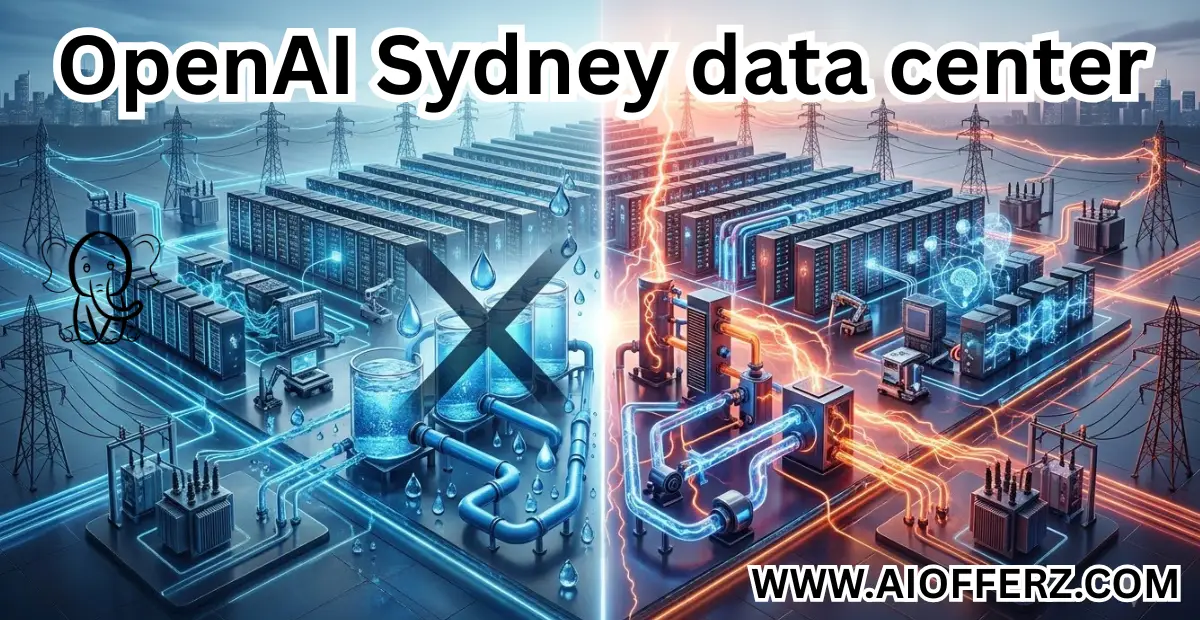
OpenAI has abandoned plans to cool its planned S7 data center in Sydney, Australia, using recycled water, switching instead to a closed-loop liquid cooling system that is expected to consume more energy.
The S7 facility, being developed with Australian data center operator NEXTDC, is planned to have 612 megawatts of capacity, placing it among the world’s largest data centers. The project is expected to support the growing computing requirements of artificial intelligence systems.
The original cooling proposal involved using treated sewage water to remove heat from the data center’s servers. The approach would have reduced reliance on drinking water while also offering potential energy-efficiency benefits.
However, NEXTDC told Reuters that discussions over the recycled-water supply ended after the project failed to secure planning permission for the pipeline required to transport the water to the facility. As a result, the developers decided to adopt a different cooling design.
Under the revised system, liquid coolant will circulate around high-performance computer chips to absorb heat. The heat will then be removed using electrically powered equipment. While this approach can significantly reduce direct water consumption, it generally requires more electricity than the previously planned recycled-water system.
The decision highlights a growing challenge for the rapidly expanding AI data center industry. Advanced AI models require enormous amounts of computing power, forcing technology companies to build increasingly large facilities while facing pressure over electricity consumption, water availability and environmental impact.
The S7 project is particularly significant because Sydney and other parts of Australia are experiencing increasing demand for data center infrastructure. NEXTDC has previously said the S7 site in Eastern Creek could accommodate hundreds of megawatts of capacity and has invested heavily in expanding its Australian infrastructure.
NEXTDC CEO Craig Scroggie said recycled water remains an attractive option where the necessary infrastructure is available, noting that it can support lower energy use and better overall sustainability.
The change therefore represents a trade-off: less dependence on water but potentially greater demand for electricity. As OpenAI and other technology companies expand AI infrastructure, the S7 project demonstrates how access to basic utilities and supporting infrastructure could become just as important as computing hardware in determining how quickly massive AI data centers can be built.