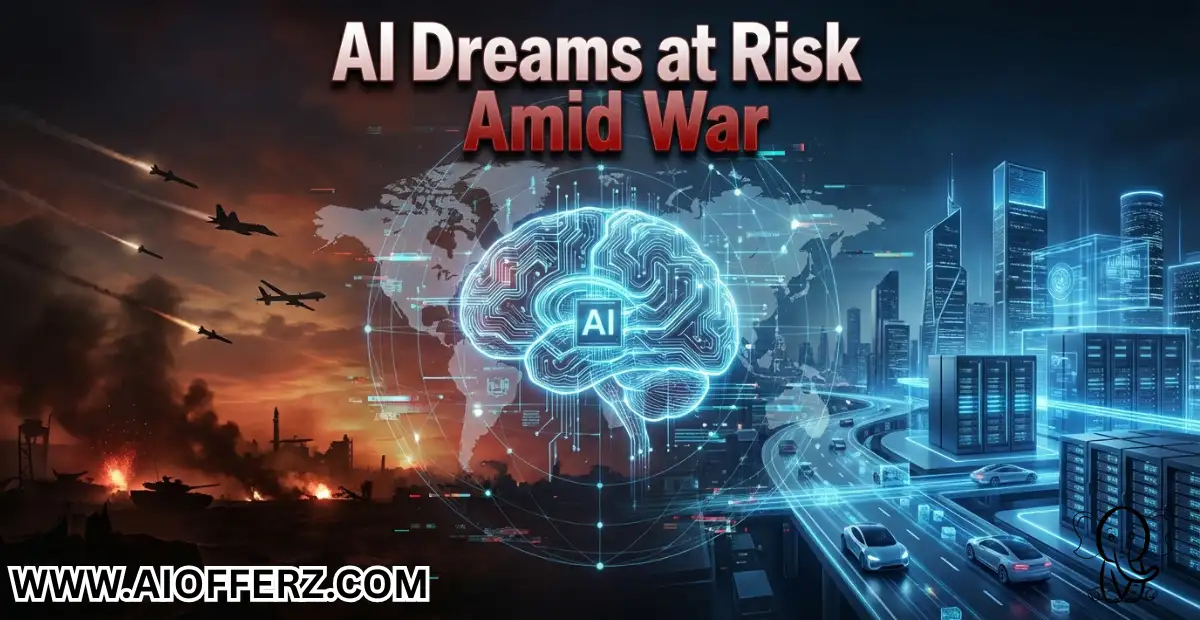
A growing conflict in the Middle East is casting serious doubts over the future of artificial intelligence investments in the region, many of which were backed or encouraged during Donald Trump’s earlier push to expand AI infrastructure and partnerships.
Over the past year, the United States had been working closely with key Middle Eastern allies such as Saudi Arabia, the UAE and Qatar to build large scale AI data centers and strengthen technological cooperation.
These efforts were seen as part of a broader plan to position the region as a major global hub for artificial intelligence and advanced computing.
However, the ongoing war with Iran has significantly disrupted those ambitions. Rising tensions, military deployments and attacks across the region have created uncertainty for long term investments, particularly in sectors like AI that depend heavily on stable infrastructure and uninterrupted energy supply.
How War Is Impacting AI Investments
The conflict has already begun affecting investor confidence and project timelines. Large data centers, which are essential for AI development, require massive energy resources and secure environments.
With instability spreading across the region, companies are reassessing risks linked to security, logistics and operational continuity.
Recent military escalations, including troop deployments and strikes, have intensified fears of wider disruption in the Middle East.
This has raised concerns that key AI infrastructure projects could face delays, increased costs or even cancellations if the situation worsens.
What It Means for the Future of AI in the Region
Experts believe the situation highlights the fragile link between geopolitical stability and technological growth. While the Middle East has the resources and strategic position to become a major AI hub, ongoing conflict could slow progress and shift investments to more stable regions.
At the same time, the war has also underscored the growing role of AI in modern conflicts from surveillance systems to strategic decision making tools.
This dual impact both as a growth opportunity and a risk factor is reshaping how governments and companies approach AI development globally.
As tensions continue, the future of AI ambitions in the Middle East remains uncertain. What was once seen as a rapidly emerging tech frontier is now facing one of its biggest tests with the outcome likely to influence global AI investments in the years ahead.