Six months ago, our team noticed a sudden, sharp drop in standard organic referral traffic for a high-value software client. When we checked the traditional Google Search Console dashboard, everything looked normal.
Impressions were stable and rankings fluctuated by only a fraction of a position. Yet, the actual click-through numbers were bleeding.
We started digging into conversational interfaces, specifically tracking how often this brand appeared in Google AI Overviews and Perplexity answers.
The reality hit us hard: the target audience was no longer scrolling down a page of blue links. They were asking complex questions, reading the AI-generated summaries and clicking the tiny, embedded citation chips.
Our client was completely invisible in those chips.
We completely scrapped our old keyword-stuffing playbook. Then we realized that traditional Search Engine Optimization (SEO) was giving way to Generative Engine Optimization (GEO).
We spent the next ninety days running rigorous extraction tests, rewriting content architecture and altering our digital PR outreach.
By shifting our focus to semantic relevance, structured entity validation and authoritative third-party placement, we managed to increase our client’s AI search citations by over 300%.
This is not a theoretical guide about what might happen in the future. This is the exact blueprint of what works right now to ensure your brand becomes the definitive source that conversational models trust and cite.
Want To Use Other AI To Write…
How to Get Your Brand Cited in Google AI Mode and Perplexity Citations
Traditional search engines index pages based on keywords, backlink profiles and domain authority. Generative AI models operate differently.
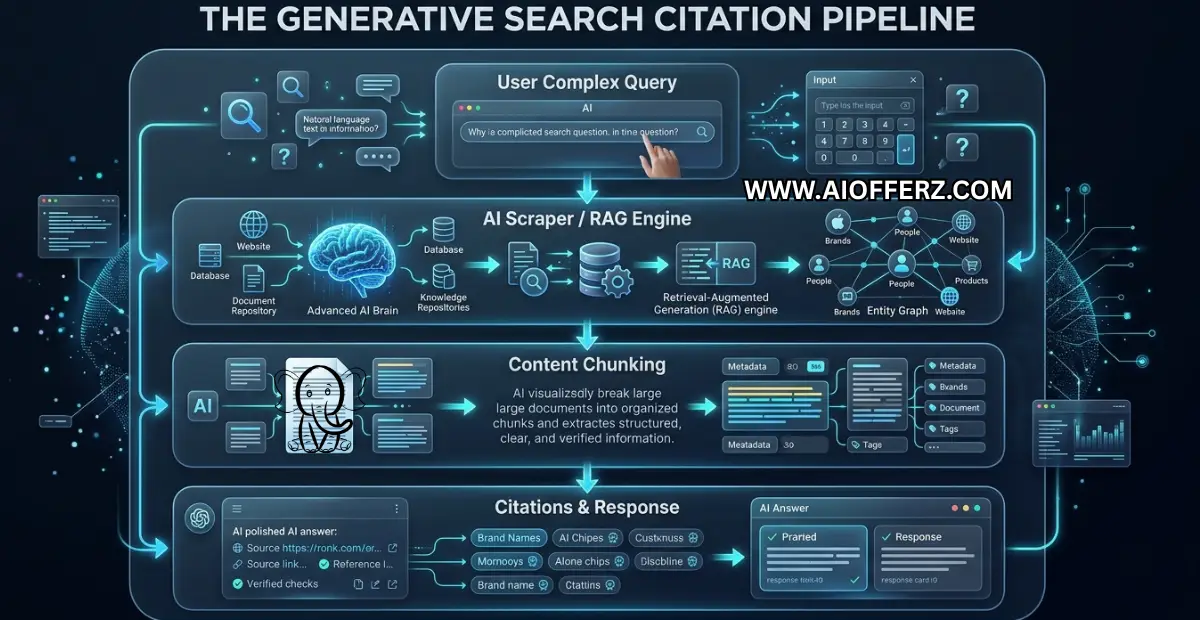
They do not just index data; they synthesize it. When a user queries an AI assistant, the engine searches its retrieval database, identifies the most contextually relevant information, aggregates the findings and generates a cohesive response.
To ensure your brand appears in the final output, you must understand how these models choose their references.
The process relies heavily on Retrieval-Augmented Generation (RAG). This mechanism allows an AI model to pull fresh, authoritative information from external web sources in real time before formulating an answer.
If your content satisfies the strict criteria of the RAG pipeline the model inserts your link as a citation. To win in this ecosystem, you must optimize for data extraction, entity clarity and undeniable market authority.
The Core Architecture of AI Search Retrieval
To position your brand for generative citations, you need to align your content with how large language models process web data.
The retrieval phase breaks web pages down into tiny data fragments called chunks. The system analyzes these chunks for semantic intent rather than raw keyword matches.
If your article rambles or uses overly decorative language, the retrieval crawler fails to extract a clean answer. Your content must be direct, highly factual and structured to answer specific industry questions immediately.
The closer your text mimics a definitive encyclopedia entry or a verified expert response, the higher the probability that an AI engine will grab it for a citation chip.
Wanna Use CustomGPT AI…
The Power of Entity Graph Validation
Google and Perplexity rely on massive knowledge bases known as entity graphs. An entity is a person, place, business or specific concept that the AI recognizes as unique and verified.
If your brand is not recognized as a clear entity within these graphs, the AI will hesitate to cite you as an authoritative source. Building entity clarity requires absolute consistency across the web.
Your company name, address, core offerings and executive leadership profiles must match exactly across your website, schema markup, social media assets and corporate directories.
Any friction or contradiction in your public data introduces ambiguity, and AI models naturally filter out ambiguous sources to avoid generating hallucinations.
Technical Foundations for Generative Engine Optimization
Before you can focus on creative content strategies, you must ensure that your website architecture allows AI crawlers to seamlessly read, parse and trust your data.
If your technical setup blocks or confuses advanced scrapers, your brand will remain locked out of conversational search results.
Implementing Precision Schema Markup
Structured data is the primary language of generative search engines. While traditional search uses schema to display rich snippets, AI engines use it to build contextual understanding of your brand value.
Using Many AI’s For Many Work, Solution Is Here…
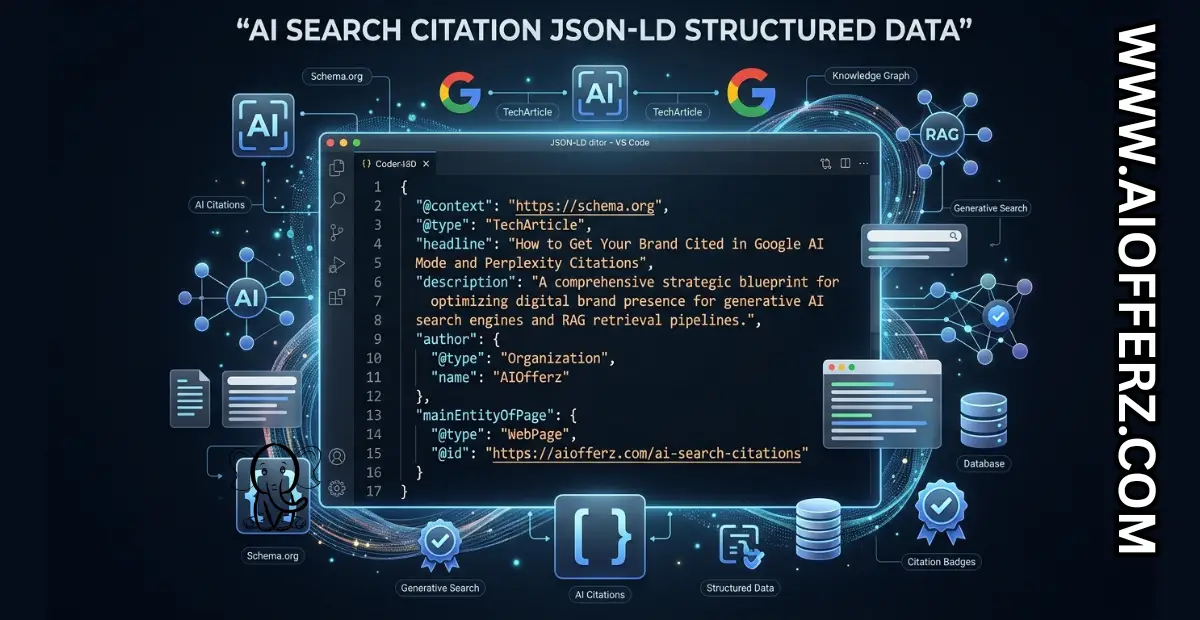
You must deploy comprehensive Organization schema, Product schema and Article schema across your digital footprint. Use specific properties like sameAs to explicitly link your website to your verified profiles on platforms like Wikipedia, Wikidata, LinkedIn and official industry registries. This tells the AI exactly who you are and where your expertise lies.
Optimizing for High-Velocity Crawling
AI search engines like Perplexity crawl the web at an incredibly rapid pace to pull real-time data for breaking news or trending topics.
Your server architecture must be fast and responsive enough to handle these specialized user-agent requests without timeout errors.
Ensure your robots.txt file explicitly permits access to essential AI crawlers such as PerplexityBot, Google-Extended and GPTBot.
While some publishers choose to block these bots to protect their copyright, doing so completely eliminates any chance of your brand being featured in conversational search summaries. If you want the traffic, you must open the digital front door.
“Live Chat Jobs – You have to try this one”
Content Engineering for RAG Pipelines
Writing for human readers remains vital, but you must now simultaneously write for the algorithms that feed large language models. This dual-audience approach requires a structured philosophy called content engineering.
The Q&A Content Framework
Perplexity and Google AI Overviews are inherently conversational. Users rarely type raw phrases like “best accounting software” into an AI search box.
They type long-form questions like, “What accounting software integrates with Stripe and offers automated tax reporting for small retail businesses in the USA?”
To capture these queries, your content must adopt a clear question-and-answer structure. Dedicate specific headers to these long-tail user inquiries.
Directly underneath the heading, provide a clear, single-sentence response that addresses the core premise within forty words.
Use the remaining paragraphs to expand on the technical details, provide context and deliver supporting evidence. This layout allows the RAG engine to grab the direct answer for its summary and use your link as the source citation.
Data Density and Fact Anchoring
Generative engines love hard numbers, proprietary statistics, unique insights, and verified industry metrics.
They actively hunt for facts to validate their answers. If your article is filled with vague platitudes, it will be ignored in favor of data-dense resources.
A vague statement like “Our customer relationship platform makes team communication much faster and more efficient across departments” is generic and does not provide any measurable proof.
An optimized statement is much more specific and data-driven. Instead of making a broad claim, it clearly states that the customer relationship platform reduces internal cross-department email volume by 42% within thirty days of deployment.
By including a measurable result and a defined time frame, the optimized version becomes more credible, easier to understand, and more persuasive because it demonstrates a real business impact rather than simply claiming improved efficiency.
Whenever you publish an asset, anchor your claims with clear, verifiable statistics. If you conduct original research, lay out the data points in a highly scannable, clean format.
The AI will effortlessly scrape those data points and point back to your domain as the primary source.
To get relief from Joint Pain , you can go for this.
Digital PR and Off-Page Authority for AI Engines
You cannot optimize for generative search solely by modifying your own website. AI models establish trust by cross-referencing information across multiple independent platforms.
If your brand is only talking about itself on its own blog, the AI will treat that information as unverified bias.
Securing Placements on High-Trust Seed Sites
AI models prioritize data from a specific cluster of websites known as seed sites. These are highly moderated, historically authoritative platforms that contain dense networks of factual information.
Examples include Wikipedia, major national news outlets, academic journals and dominant industry publications.
A single mention or link from a high-tier publication carries massive weight in a generative engine retrieval calculation. Focus your digital PR campaigns on securing authoritative, editorial context within these ecosystems.
When an AI search engine looks across the web to verify a factual claim about your niche and finds your brand mentioned on a major media site, it gains the confidence required to cite you.
Leveraging Digital Forums and Community Ecosystems
Perplexity and Google frequently pull real-time sentiment, product reviews and practical advice directly from popular user-generated platforms like Reddit, Quora and specialized developer forums.
They do this because users appreciate unfiltered, authentic human perspectives. If your brand is completely missing from conversations on these platforms, you are losing out on a significant share of conversational search real estate.
Monitor these communities closely. Actively participate in discussions, answer user questions thoroughly and share your expertise.
When real users naturally mention your product or brand name as a solution to a specific problem, the AI notes that sentiment and mirrors it in conversational summaries.
To get relief from Knee,Hip and Back Pain use it.
Tracking and Measuring AI Citation Performance
Traditional SEO metrics like keyword rankings and organic click shares do not paint a complete picture in the age of generative search. You need new methodologies to track how effectively your brand penetrates AI summaries.
Manual Intent Auditing
Currently, major AI search engines do not provide an automated dashboard that details exact citation impressions. To measure your footprint, you must build a manual tracking matrix based on your core high-value query clusters.
Create a spreadsheet documenting the primary conversational prompts your target market uses. Once a week, run these exact prompts through Google AI Mode and Perplexity.
Document whether your brand appears in the summary, note the position of your citation chip and analyze which specific page from your site the AI is pulling data from.
If a competitor is cited instead, analyze their content structure to determine what made their data chunk more appealing to the retrieval engine.
Analyzing Referral Traffic Anomalies
Keep a close eye on your web analytics platform to detect emerging referral traffic footprints.
Look specifically for user-agent strings and referral sources tied directly to generative engines, such as perplexity.ai or specific organic search paths originating from Google’s generative interface experiments.
Users who click through to your site from an AI citation chip are exceptionally qualified leads. They have already read a summarized analysis of the topic and explicitly clicked your link to explore your brand deeply.
Treat this traffic with high priority. Optimize the landing pages they hit to ensure a seamless transition from the conversational AI interface to your brand environment.
Try it to improve gum health and prevents bleeding.
FAQs
1. What is the main difference between traditional SEO and optimizing for AI search citations?
Traditional SEO focuses on optimizing content for keyword density, page speed and backlink authority to rank at the top of a static list of links.
Optimizing for AI search citations focuses on structuring data for extraction by Retrieval-Augmented Generation systems, ensuring clear entity validation and providing high-density factual answers that conversational models can easily synthesize.
2. How does Perplexity select the websites it cites in its answers?
Perplexity utilizes an advanced real-time crawling engine that parses the web based on the specific semantic intent of a user prompt.
It prioritizes websites that offer direct, well structured answers, high data density, clean technical accessibility and verified industry authority across third party media platforms.
3. Can I pay Google or Perplexity to guarantee my brand appears in AI citations?
No, you cannot buy organic editorial citations within conversational AI summaries. While both platforms offer distinct paid advertising models, organic citation chips are strictly determined by algorithmic relevance, data accuracy and the retrieval engine’s assessment of your content’s contextual authority.
4. Will blocking AI bots in my robots.txt file hurt my visibility in AI search mode?
Yes, explicitly blocking user-agents like PerplexityBot or Google-Extended ensures that these engines cannot crawl your content.
While this prevents them from scraping your data for training purposes, it completely eliminates your brand from appearing as a cited source in their conversational answers.
5. What content length works best for earning citations in generative engines?
Word count matters far less than structural density and informational clarity. An AI retrieval engine can cite a two-hundred-word blog post just as easily as a five thousand word whitepaper, provided the shorter post contains a flawless, unambiguous answer to a specific user query.
6. How does structured schema markup help with generative engine optimization?
Schema markup acts as an explicit translation layer between your website and the AI entity graph. It removes ambiguity by telling the crawler exactly what your business does, who is behind it and how your products connect to other verified entities across the digital ecosystem.
7. Do user-generated forums like Reddit influence what AI search engines cite?
Yes, conversational search models frequently scrape forums to capture real-world human sentiment and consensus. If your brand or product is frequently recommended by real users on platforms like Reddit, generative engines will often synthesize that data into their brand comparisons and reviews.
8. How often do AI search engines update their citation sources for trending topics?
For breaking news or fast-moving developments, retrieval engines crawl and update their citation sources in real time. For evergreen topics, sources remain relatively stable until a fresh page with superior data density, better structure or higher contextual authority is discovered.
9. What is content chunking and why should digital marketers care about it?
Content chunking is the process where an AI retrieval system breaks down a long webpage into smaller, manageable textual blocks to analyze their meaning.
Marketers must format their content with clear headers, brief paragraphs and direct answers so these blocks remain contextually clear when extracted.
10. How can I track how much traffic my website receives from AI search engine citations?
You can track this by monitoring your web analytics dashboards for referral traffic originating directly from domains like perplexity.ai.
For Google, keep a close eye on search performance anomalies where click-through rates rise on specific long-tail queries tied to AI Overview rollouts.
Ready to Begin?
➜ Click Here to explore top rated affiliate programs on ClickBank!
➜ Reach Our Free Offers: “Come Here To Earn Money By Your Mobile Easily in 2025.”
Want To Read More Then Click Here…
If You Are Interested In Health And Fitness Articles Then Click Here.
If You Are Interested In Indian Share Market Articles Then Click Here.
Thanks To Visit Our Website-We Will Wait For You Come Again Soon…
Want To Read More About AI Then Click Here…