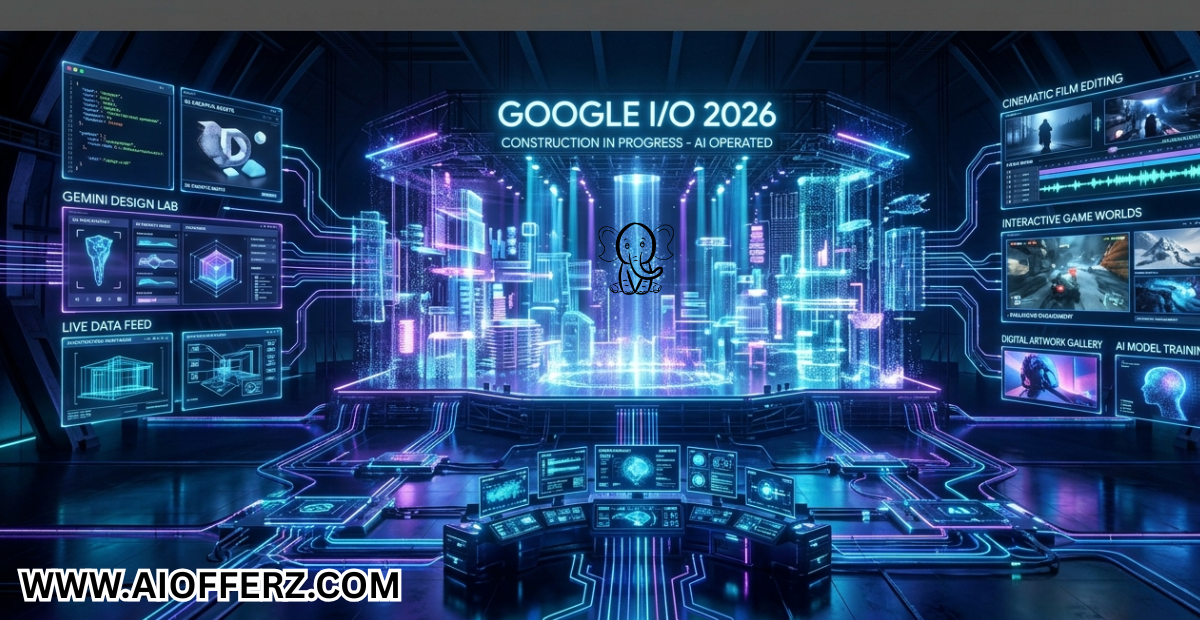
Google has offered a rare behind-the-scenes look at how artificial intelligence played a major role in creating and managing its biggest annual technology event, Google I/O 2026.
While the conference introduced a range of new AI products and services, the company has now revealed that many of those same tools were used internally to design experiences, create content, develop applications, and streamline production for the event itself.
According to Google, the company challenged its teams to use AI not just as a demonstration tool but as a practical part of the creative process.
Engineers, designers, filmmakers, and developers worked with Gemini-powered systems to speed up workflows and explore new ways of producing content.
The goal was to combine human creativity with AI assistance rather than replace human involvement altogether.
AI Powered Everything From Films to Interactive Experiences
One of the most notable examples was the creation of an animated short film called “TPU Training Day.
” Google used Gemini, Google AI Studio, and experimental AI models to transform simple puppet-based animations into polished cinematic sequences while preserving the original artistic style.
The company said AI helped accelerate production without removing the human touch that made the project unique.
Beyond film production, Gemini was also used to help design the visual identity of I/O 2026. AI-generated concepts, icon styles, and design experiments assisted creative teams in developing the final branding seen across presentations, digital platforms, and event signage.
Interactive experiences, including AI-generated games, music demonstrations, and personalized attendee experiences, were also powered by various Gemini-related technologies.
Google Showcases Real-World AI Adoption
The announcement highlights a broader trend across the technology industry: companies are increasingly using AI tools internally to improve productivity and creativity.
Google says AI helped teams prototype faster, automate repetitive work, and focus more time on high-value creative decisions.
Industry observers see this as an important milestone because it demonstrates how AI is moving beyond experimental use cases and becoming part of real-world workflows.
Rather than simply launching new AI products, Google is showcasing how those products can be integrated into large-scale projects and events.
As competition in the AI sector continues to intensify, Google’s decision to publicly explain how Gemini helped build I/O 2026 may serve as a practical example of how businesses can apply AI tools to content creation, design, software development, and event production in the years ahead.