OpenAI Responds Publicly as Legal Battle With Apple Intensifies
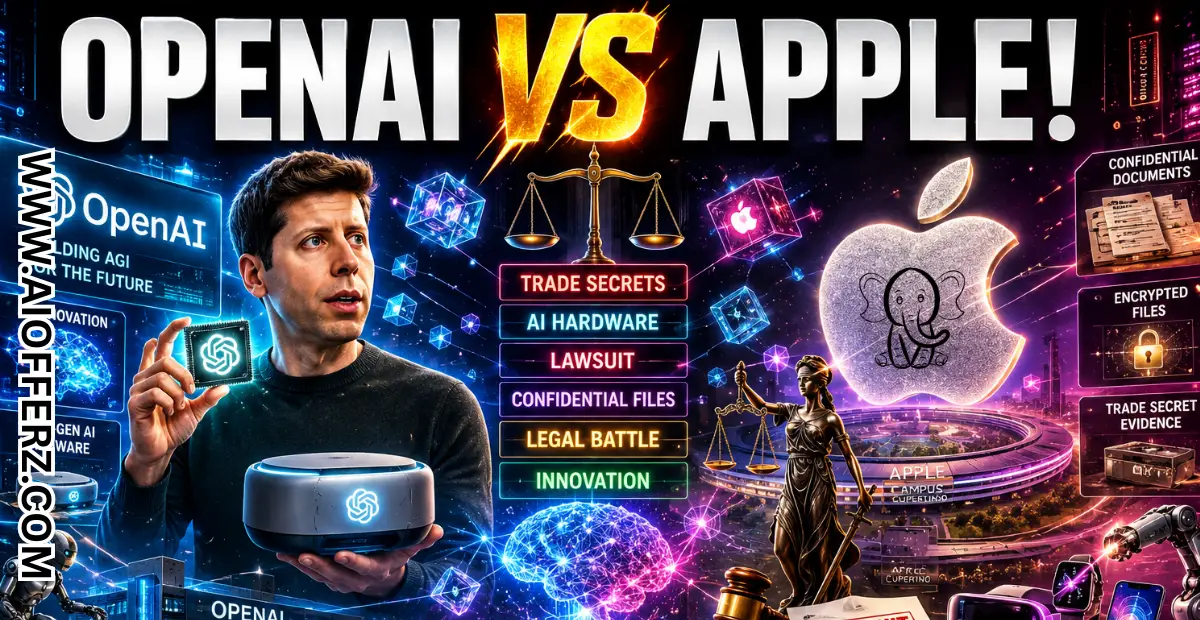
OpenAI has strongly rejected Apple’s allegations that it improperly obtained confidential information from former Apple employees, escalating an increasingly high-profile legal dispute between two of the world’s biggest technology companies. In a detailed public statement titled “Apple is getting this wrong,” the ChatGPT maker dismissed Apple’s accusations as false and unnecessary, insisting that it has never sought or used Apple’s trade secrets to develop its AI hardware ambitions.
The dispute follows Apple’s request for a preliminary injunction in a U.S. court aimed at preventing OpenAI and two former Apple executives from accessing or using confidential company information while the trade secrets lawsuit proceeds.
OpenAI Releases Messages to Challenge Apple’s Claims
To support its position, OpenAI published screenshots of iMessage conversations and email exchanges involving former Apple engineer Chang Liu, who recently joined the company. According to OpenAI, the conversations show Apple employees contacting Liu after his departure and asking him to help locate internal files, contradicting Apple’s allegation that he improperly retained confidential information.
OpenAI also argued that Apple’s internal systems themselves allowed certain former employees to continue accessing company files after leaving, describing the issue as an internal security management problem rather than employee misconduct.
The AI company further defended former Apple executive Tang Tan, saying he consistently instructed colleagues not to use confidential information belonging to competitors and maintained high professional standards throughout his career.
Lawsuit Linked to OpenAI’s Growing AI Hardware Plans
The legal conflict comes as OpenAI expands aggressively into consumer hardware following its multi-billion-dollar acquisition of io, the AI device startup co-founded by former Apple design chief Jony Ive. Apple alleges that the departing executives possessed confidential engineering knowledge directly related to products OpenAI is now developing.
However, OpenAI insists its hardware research is based entirely on its own innovation and publicly available technology, not on proprietary Apple information.
AI Competition Enters a New Phase
The dispute highlights the increasingly intense competition between major technology companies as Artificial Intelligence becomes the industry’s primary growth engine. With companies investing billions in AI devices, software, and infrastructure, intellectual property disputes are becoming more common.
Legal experts believe the outcome of the case could influence how technology companies handle employee mobility, confidential information, and AI hardware development in the future. For now, both Apple and OpenAI remain firmly committed to defending their positions as the case moves through the U.S. legal system.