Gemini Robotics ER 2 Brings Faster Thinking and Smarter Automation
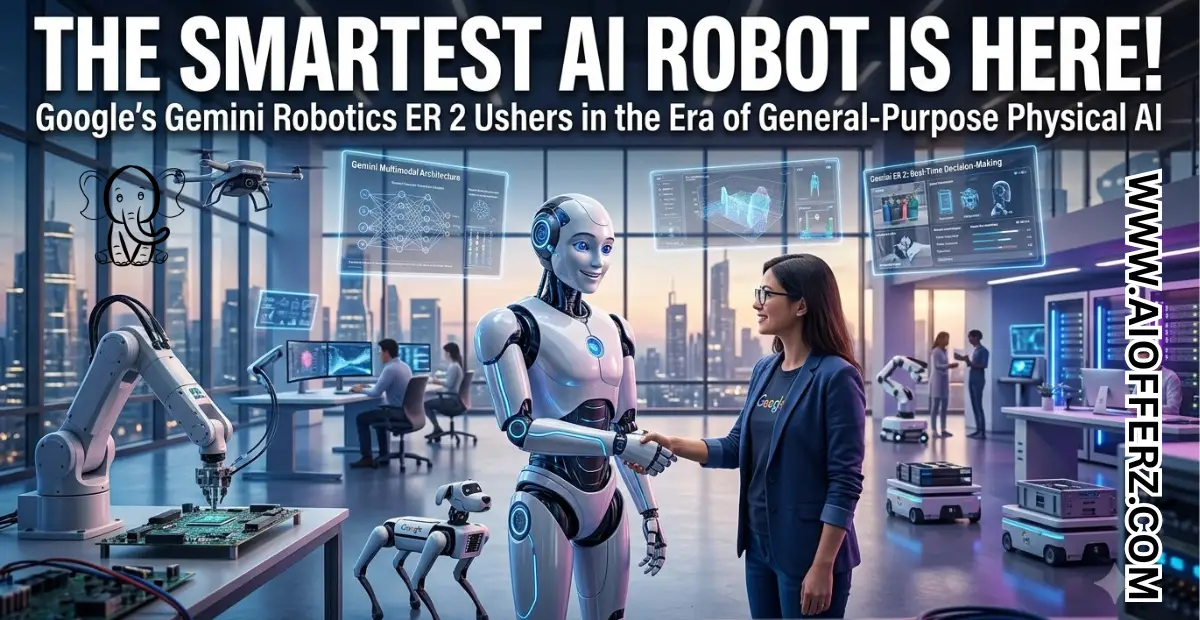
Google has introduced Gemini Robotics ER 2, its latest embodied reasoning model designed to make robots more intelligent, responsive, and capable of performing complex real-world tasks. Unlike traditional robotic systems that focus mainly on movement, Gemini Robotics ER 2 acts as a high-level AI brain, enabling robots to understand human instructions, analyze their surroundings, plan multiple actions, and coordinate with other robots in real time.
The new model is now available to developers through the Gemini API, Google AI Studio, and a private preview on the Gemini Enterprise Agent Platform. Google believes the technology represents a significant step toward creating more helpful and adaptable AI-powered robots.
Smarter Robots That Learn, Adapt, and Collaborate
One of the biggest improvements in Gemini Robotics ER 2 is its ability to monitor continuous video feeds and understand task progress while operating. The AI can determine whether a job has been completed correctly, identify mistakes during execution, and automatically adjust its actions without restarting the entire workflow.
Google also introduced multi-robot collaboration, allowing different types of robots to work together on complex assignments. Instead of relying on a single machine, multiple robots can now communicate through a shared understanding of tasks, making industrial automation and warehouse operations more efficient.
The system also integrates with Google’s Live API, allowing robots to think and respond with minimal delay. This enables smooth real-time decision-making instead of pausing between every action.
Improved Safety and Real-World Performance
Gemini Robotics ER 2 delivers major advances in spatial reasoning, object recognition, progress tracking, and safety. The AI can detect whether tasks have been completed successfully, identify humans nearby, and automatically stop robotic movement whenever a person enters its working area before safely resuming operations.
Google says the model also performs significantly better at reading instruments, understanding visual information, and answering questions about physical environments. These capabilities make it suitable for manufacturing, logistics, healthcare, research laboratories, and service robotics.
A Major Step Toward the Future of Physical AI
With Gemini Robotics ER 2, Google is pushing the boundaries of Physical AI by combining advanced reasoning, real-time decision-making, and collaborative robotics into one platform. As industries continue investing in intelligent automation, the new model could accelerate the adoption of AI-powered robots capable of assisting humans in increasingly complex everyday environments while maintaining higher safety and efficiency standards.