Microsoft Explains the Reason Behind Latest Layoffs
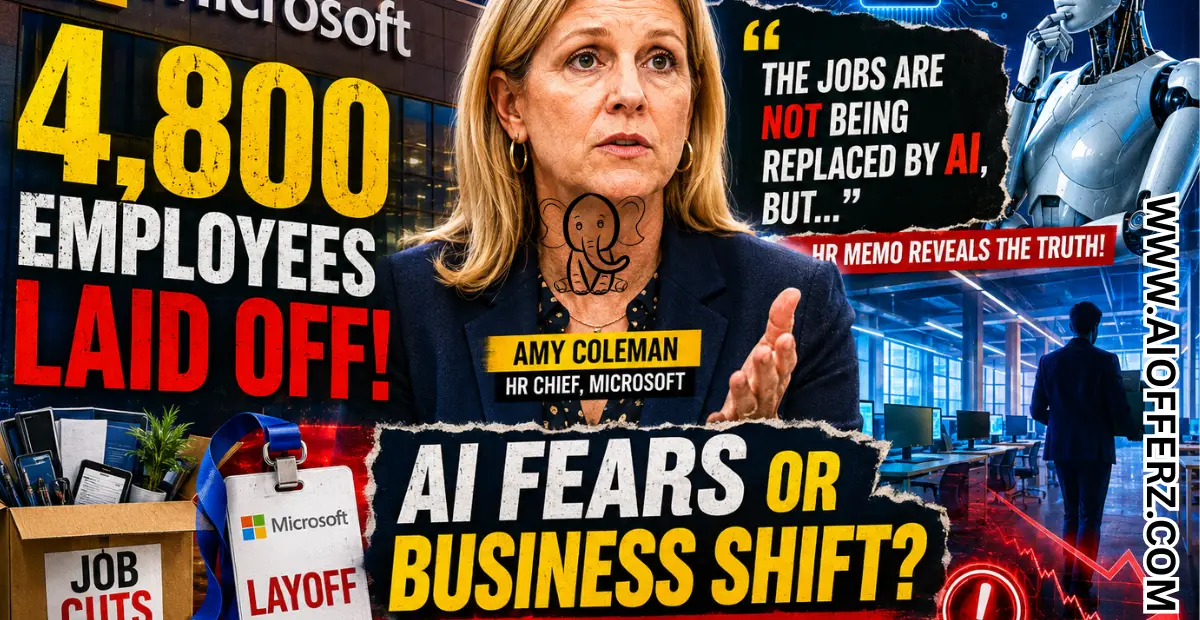
Microsoft has begun another major round of workforce reductions, affecting around 4,800 employees across multiple business divisions. While the timing of the layoffs has fueled speculation that Artificial Intelligence is replacing human workers, the company’s leadership says the situation is more complex than many believe.
In a memo sent to employees, Microsoft’s Chief People Officer Amy Coleman emphasized that the layoffs are part of a broader business restructuring rather than a direct replacement of workers with AI. She acknowledged that the decision has created uncertainty and disappointment but stressed that the company remains committed to supporting affected employees during the transition.
HR Memo Clarifies Microsoft’s AI Strategy
Coleman explained that Microsoft is simplifying its organizational structure to become more agile as it continues investing heavily in AI Infrastructure, cloud computing, and next-generation software platforms. According to the memo, the company is redesigning teams, reducing management layers, and aligning resources with future business priorities instead of simply replacing jobs with AI systems.
She also assured employees that Microsoft remains focused on long-term growth and innovation. The company plans to continue hiring in strategic areas where new skills are needed, particularly in artificial intelligence, cybersecurity, engineering, and cloud technologies.
AI Investments Continue Despite Workforce Changes
Microsoft has invested billions of dollars in expanding Cloud Computing, AI data centers, advanced chips, and AI-powered products such as Copilot and Azure AI. Industry experts say these investments require companies to regularly evaluate business operations and shift resources toward high-growth technologies.
Although AI is changing how work is performed across many departments, analysts note that organizational restructuring, changing customer demand, and operational efficiency are also playing major roles in recent workforce reductions.
Technology Industry Faces a New Phase
Microsoft’s announcement reflects a broader trend across the global technology sector, where companies are balancing aggressive AI investment with cost optimization. Businesses are increasingly focusing on automation, digital transformation, and higher productivity while adapting to rapidly changing market conditions.
For employees, the transition brings understandable concerns about future careers. However, Microsoft maintains that the current layoffs should not be viewed simply as AI replacing people. Instead, the company says it is preparing for the next phase of technological growth by building a workforce with skills that match the future of the AI Industry, enterprise software, and digital innovation.
As Artificial Intelligence continues reshaping the technology landscape, companies like Microsoft face the challenge of investing in the future while supporting employees through periods of significant organizational change.