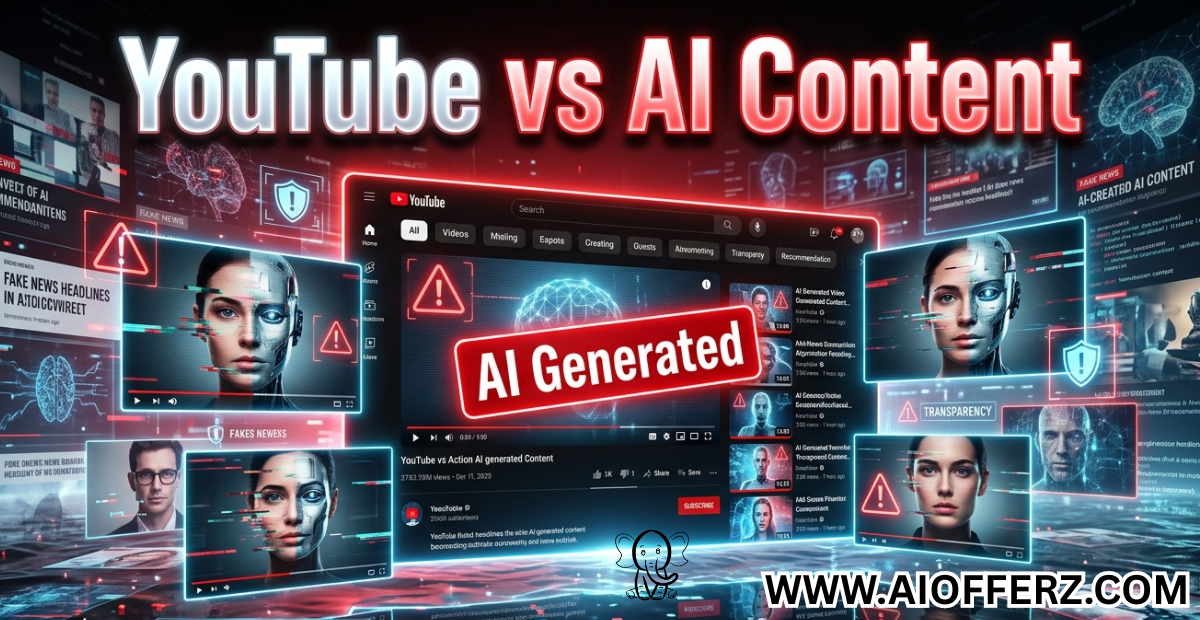
As artificial intelligence rapidly transforms the internet, YouTube is taking an unexpected stand against the growing flood of AI-generated content online. While most major technology companies continue aggressively expanding AI features across their platforms, YouTube is now pushing for stronger transparency rules that could reshape how AI videos are viewed across social media.
The platform recently announced new policies requiring clearer labels for AI-generated or heavily altered videos. Instead of hiding disclosures in video descriptions, YouTube will now display visible notices directly below videos and as overlays on Shorts, making it easier for viewers to immediately recognize synthetic content.
The move comes amid growing concerns over misinformation, deepfakes, and the increasing difficulty of distinguishing real footage from AI-created media. Across the internet, AI tools are now capable of generating highly realistic videos, cloned voices, and photorealistic faces that can easily mislead viewers.
YouTube Tightens AI Transparency Rules
YouTube says creators are still expected to disclose when their content uses significant photorealistic AI. However, the company will no longer rely only on creators to report it. New automated detection systems will identify AI-generated material and apply labels automatically if necessary.
The company explained that viewers repeatedly asked for better transparency around AI content. Under the updated system, AI labels will appear prominently on videos instead of being buried in long descriptions that many users never read.
The platform is also using technologies such as C2PA metadata and Google’s SynthID watermarking system to help detect AI-generated content more accurately.
AI Boom Creates Pressure on Online Platforms
The decision highlights a growing tension inside the tech industry. Many companies are investing billions into AI systems, racing to avoid being left behind in the global AI competition. At the same time, concerns are rising about the impact of synthetic media on trust, journalism, entertainment, and public discourse.
Online discussions have shown mixed reactions to YouTube’s new policy. Some users praised the platform for finally addressing the spread of “AI slop” and misleading videos, while others questioned whether the labels will be enough to stop misinformation.
Importantly, YouTube clarified that AI labels will not affect video recommendations or monetization. Creators can still earn revenue from AI-generated videos as long as the content follows platform guidelines.
Industry experts say the move could become an important turning point for social media platforms as governments and regulators worldwide push for stronger disclosure rules around AI-generated content. In an internet increasingly filled with synthetic media, YouTube’s latest decision suggests transparency may soon become just as important as innovation.