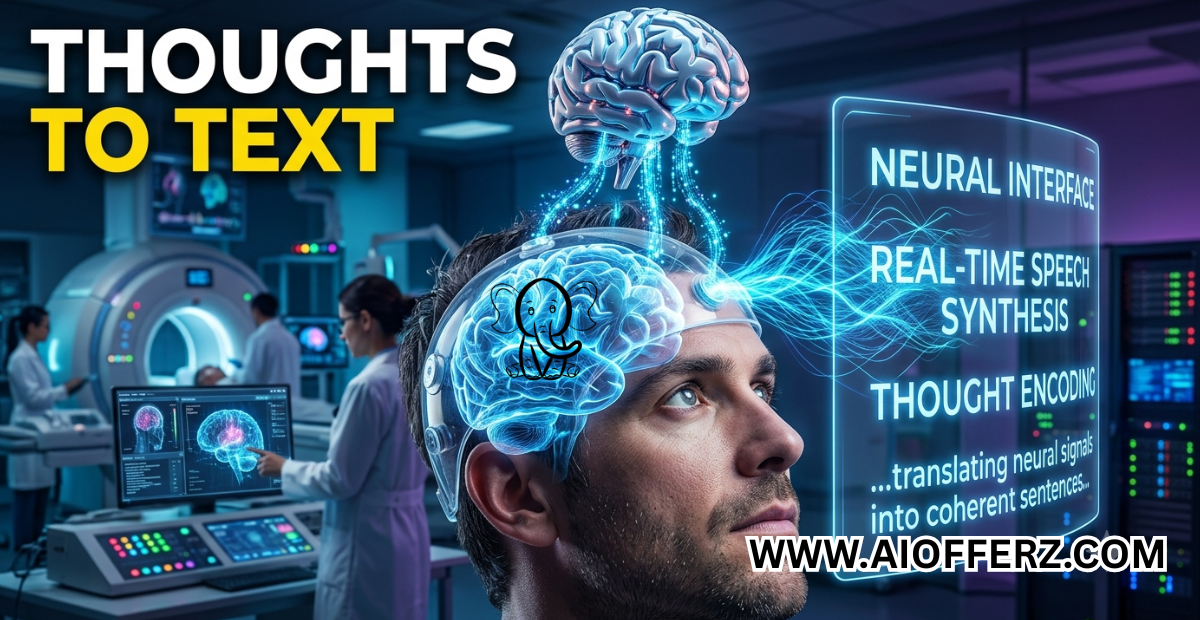
Meta Unveils AI System That Converts Brain Activity Into Text
Meta has introduced Brain2Qwerty v2, an advanced artificial intelligence system capable of translating brain activity into written text without requiring brain implants or surgery. The breakthrough marks a significant step forward in brain-computer interface research and could eventually transform communication for people who have lost the ability to speak due to neurological disorders or injuries.
Unlike traditional brain-computer interfaces that rely on surgically implanted electrodes, Brain2Qwerty v2 uses non-invasive magnetoencephalography (MEG) to capture brain signals. The AI model then converts these signals into meaningful words and complete sentences in real time.
Improved Accuracy Without Brain Surgery
According to Meta, the latest version represents a major improvement over its earlier research. Brain2Qwerty v2 can decode words and entire sentences instead of predicting characters one by one. In testing, the system achieved word recognition accuracy of up to 78% for the best-performing participant, bringing non-invasive brain decoding closer to the performance of some invasive technologies.
The AI model was trained using approximately 22,000 text samples collected from nine volunteers. Each participant spent around ten hours typing while wearing an MEG scanner, allowing researchers to link brain activity with the words being typed.
A New Hope for People With Communication Disorders
Researchers believe the technology could eventually help millions of people living with conditions such as paralysis, ALS, stroke, or other neurological disorders that affect speech. Instead of relying on invasive surgery, future communication devices may only require external brain-scanning equipment combined with AI-powered decoding.
Meta has also announced that it is releasing the training code for Brain2Qwerty to support further research in neuroscience and artificial intelligence. The company hopes open research will accelerate the development of practical communication tools for patients who cannot speak naturally.
Research Still Faces Practical Challenges
Although the results are promising, researchers emphasize that Brain2Qwerty remains an experimental system. It currently requires specialized laboratory equipment and has only been tested with a limited number of participants. Before the technology can be used in hospitals or homes, further improvements in speed, accuracy, and portability will be necessary.
Even so, the latest breakthrough demonstrates how artificial intelligence is opening new possibilities for human communication, bringing scientists closer to enabling people to express their thoughts without speaking or undergoing brain surgery.