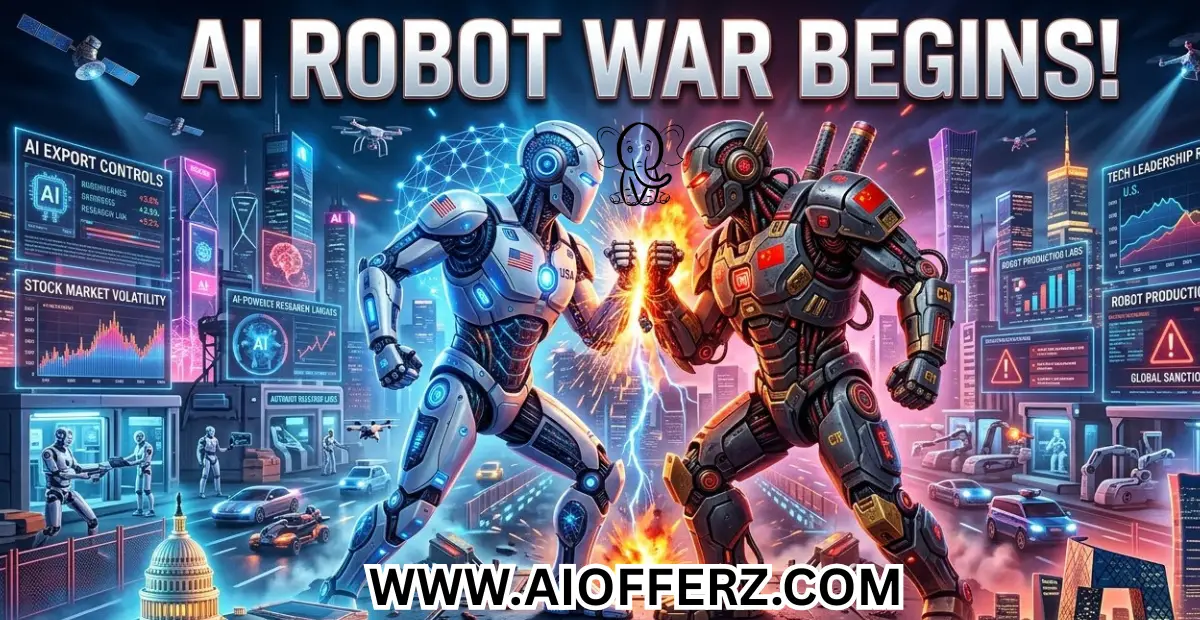
U.S. Robot Restrictions Spark Fresh Technology Dispute
Tensions between the United States and China have escalated once again after the U.S. Federal Communications Commission (FCC) introduced new restrictions on imports of advanced foreign-made robotic devices, including humanoid robots. The decision, which the FCC said was driven by cybersecurity concerns, has prompted a sharp response from Beijing, with Chinese officials warning that the move could damage economic relations and trigger countermeasures.
China’s Ministry of Commerce criticized the restrictions, arguing that they undermine the stability of bilateral trade and technology cooperation. The ministry urged Washington to reverse its decision and warned that China would take appropriate action if the restrictions remain in place.
China Warns of Possible Countermeasures
Although the FCC’s announcement did not mention any country by name, the new policy is widely seen as targeting China’s rapidly expanding humanoid robotics industry. Chinese manufacturers have emerged as global leaders in the sector, with companies such as Agibot, Unitree, and UBTech increasing production and preparing for major international expansion.
Industry analysts believe the restrictions could slow the overseas growth plans of several Chinese robotics firms, particularly those considering public listings. Experts also suggest that Beijing could respond by tightening export controls on critical rare earth materials or imposing additional restrictions on American technology companies operating in China.
The latest dispute comes as both countries continue competing for leadership in Artificial Intelligence, robotics, semiconductor technology, and advanced manufacturing.
Humanoid Robot Industry Faces Growing Uncertainty
The new restrictions have created uncertainty across the global robotics market. Investors are closely watching whether the trade dispute will affect international supply chains, future investments, and research partnerships.
Despite the challenges, companies on both sides are expected to continue investing heavily in next-generation humanoid robots, autonomous systems, and AI-powered automation. Market observers believe demand for intelligent robots will continue growing across manufacturing, healthcare, logistics, and consumer applications.
AI and Robotics Become a Strategic Battleground
The latest disagreement highlights how Artificial Intelligence and robotics have become central to the broader technology rivalry between the world’s two largest economies. Governments increasingly view advanced AI hardware and intelligent robots as strategically important industries with national security implications.
As diplomatic talks continue, businesses and investors will closely monitor whether the two countries can reduce tensions or whether additional technology restrictions and trade measures will further reshape the global AI and robotics industry.